
Last updated November 21, 2026
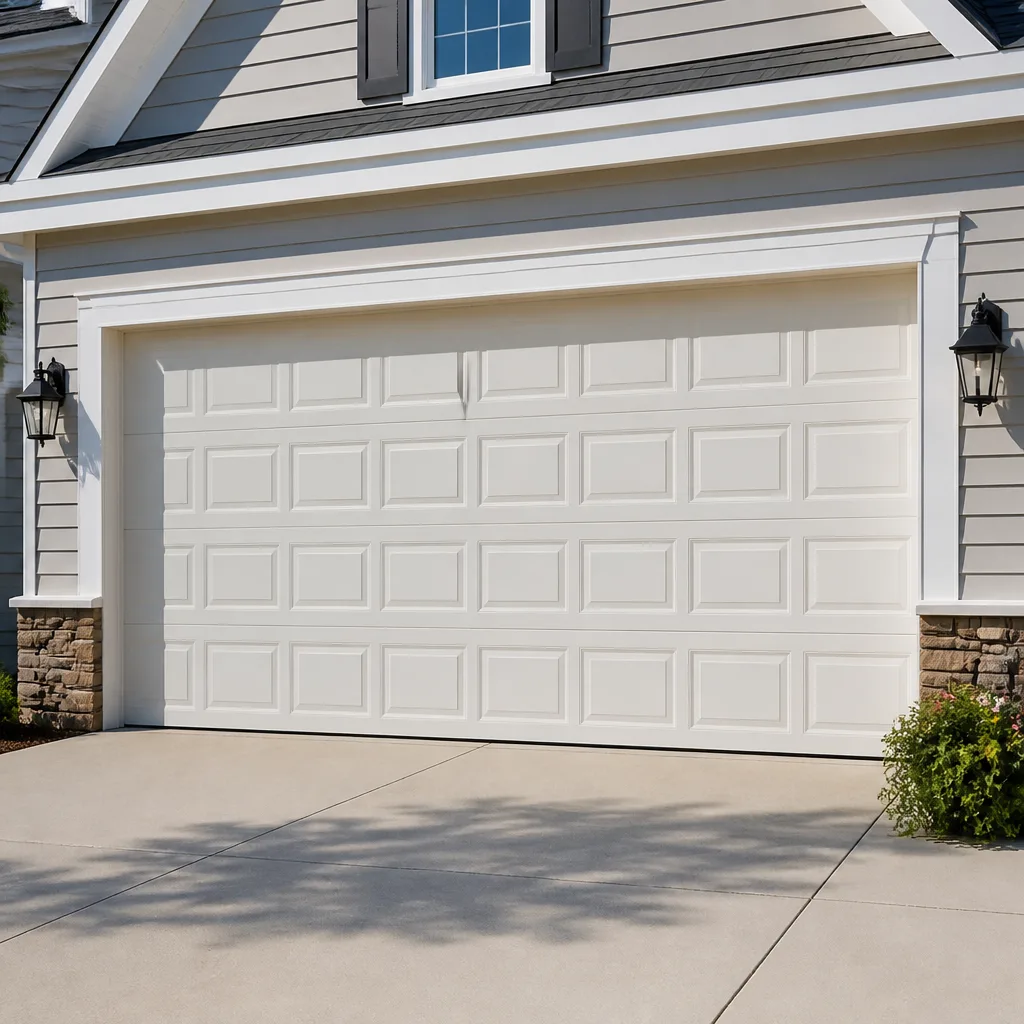 Raised-panel steel
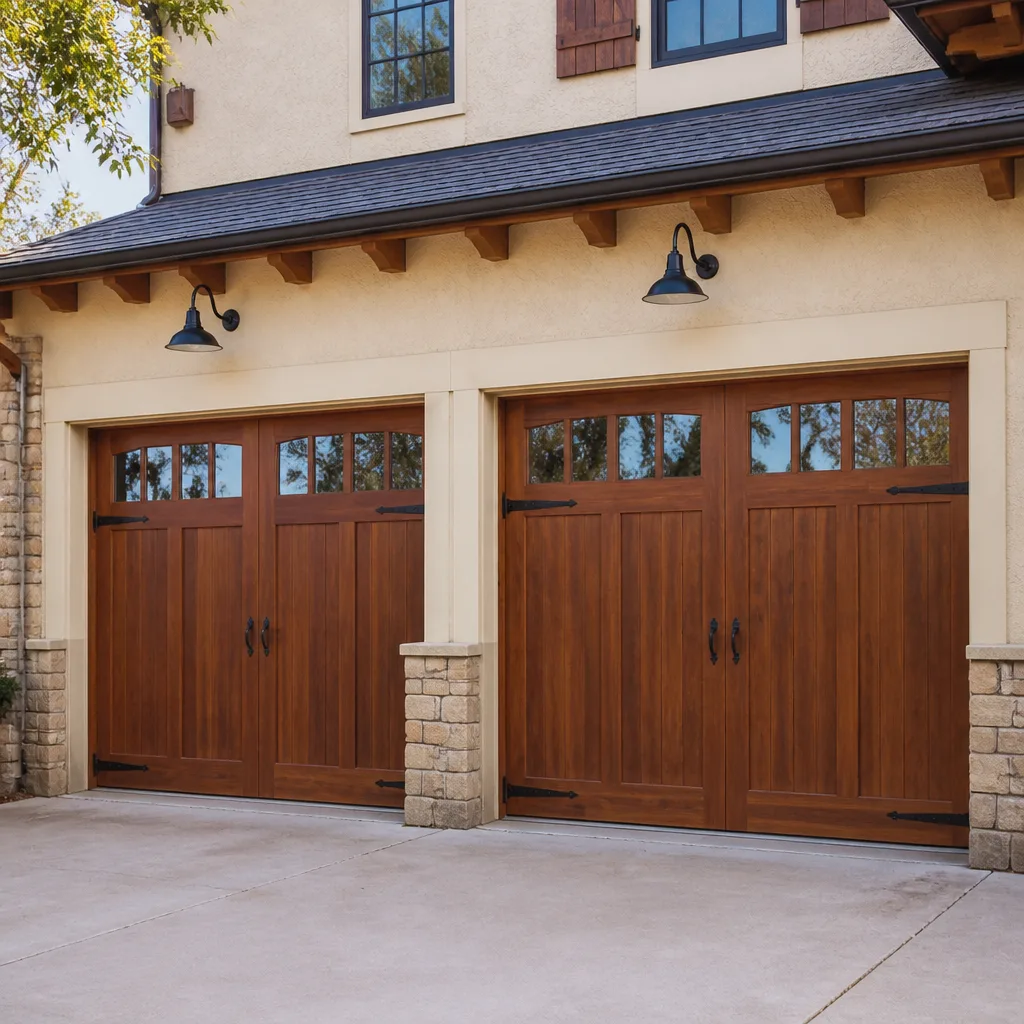 Carriage house
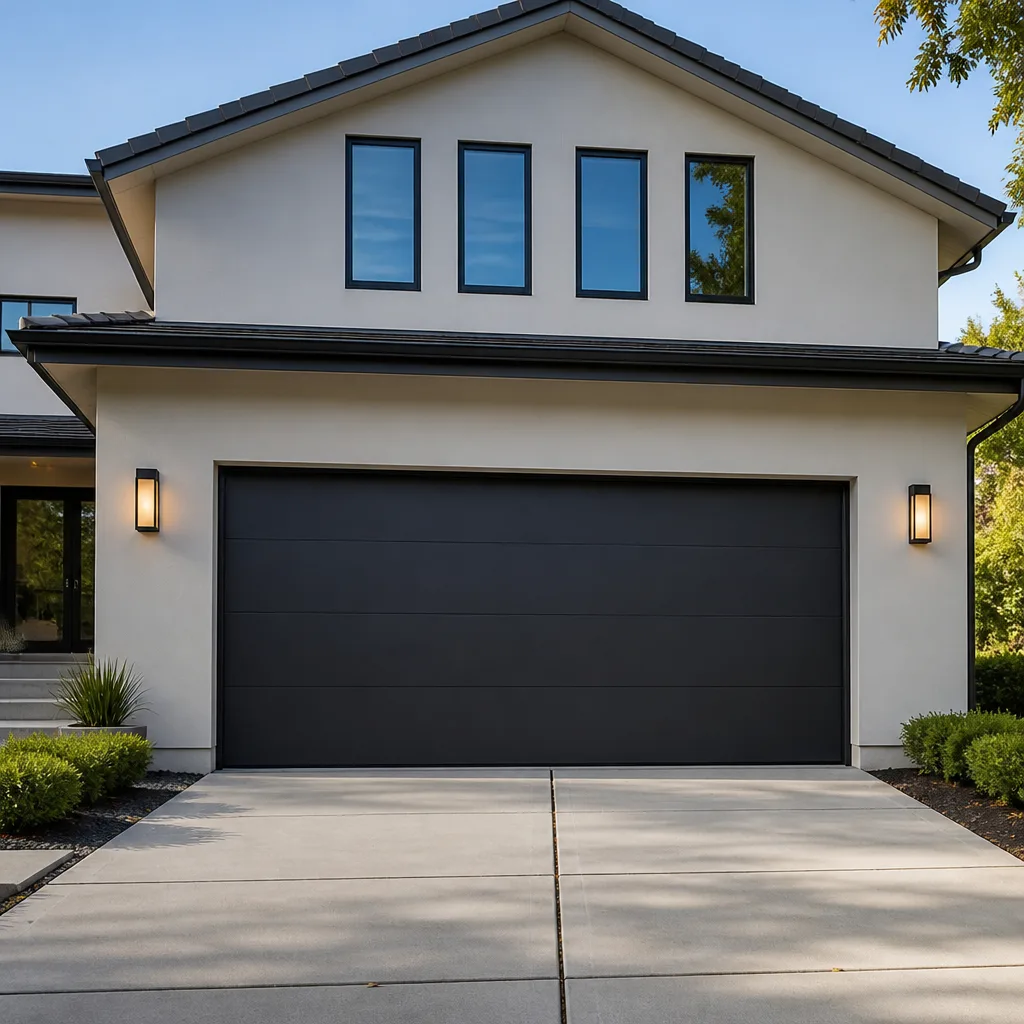 Modern flush
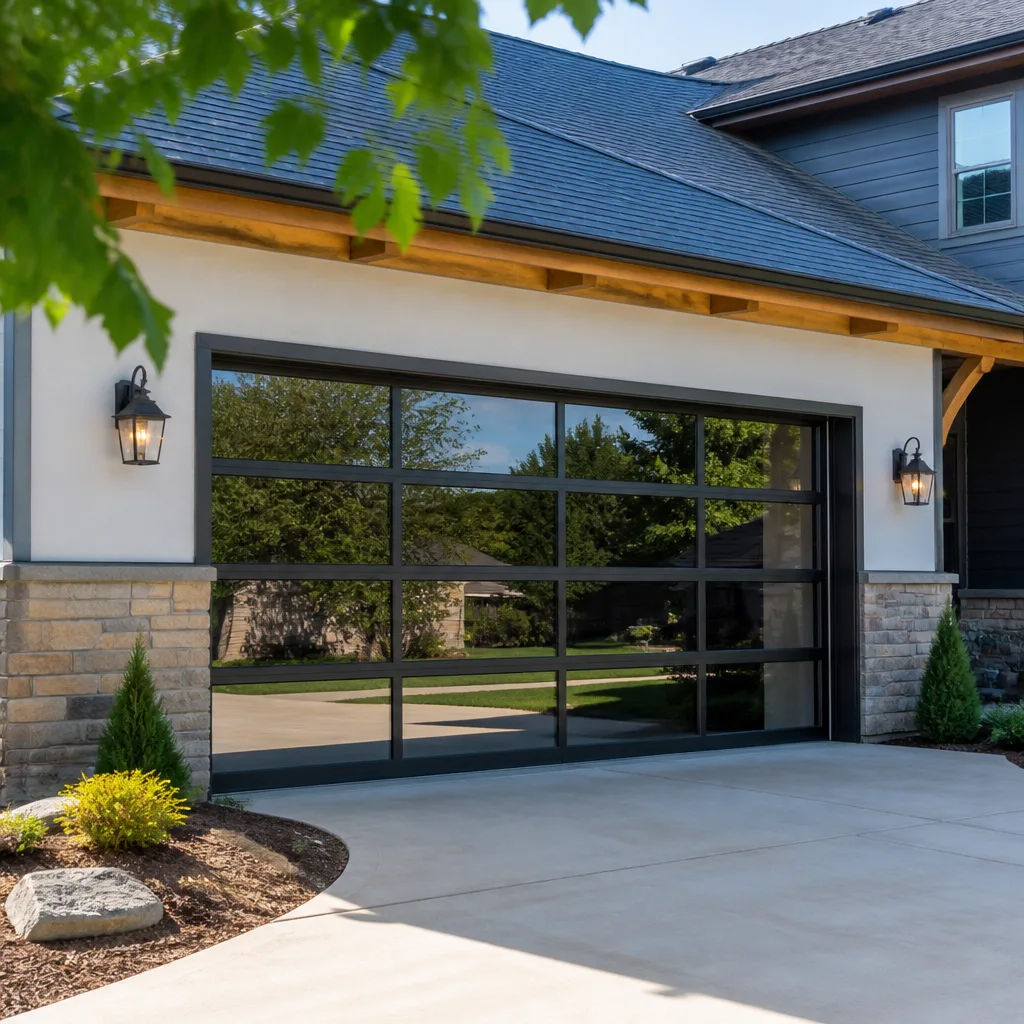 Full-view glass
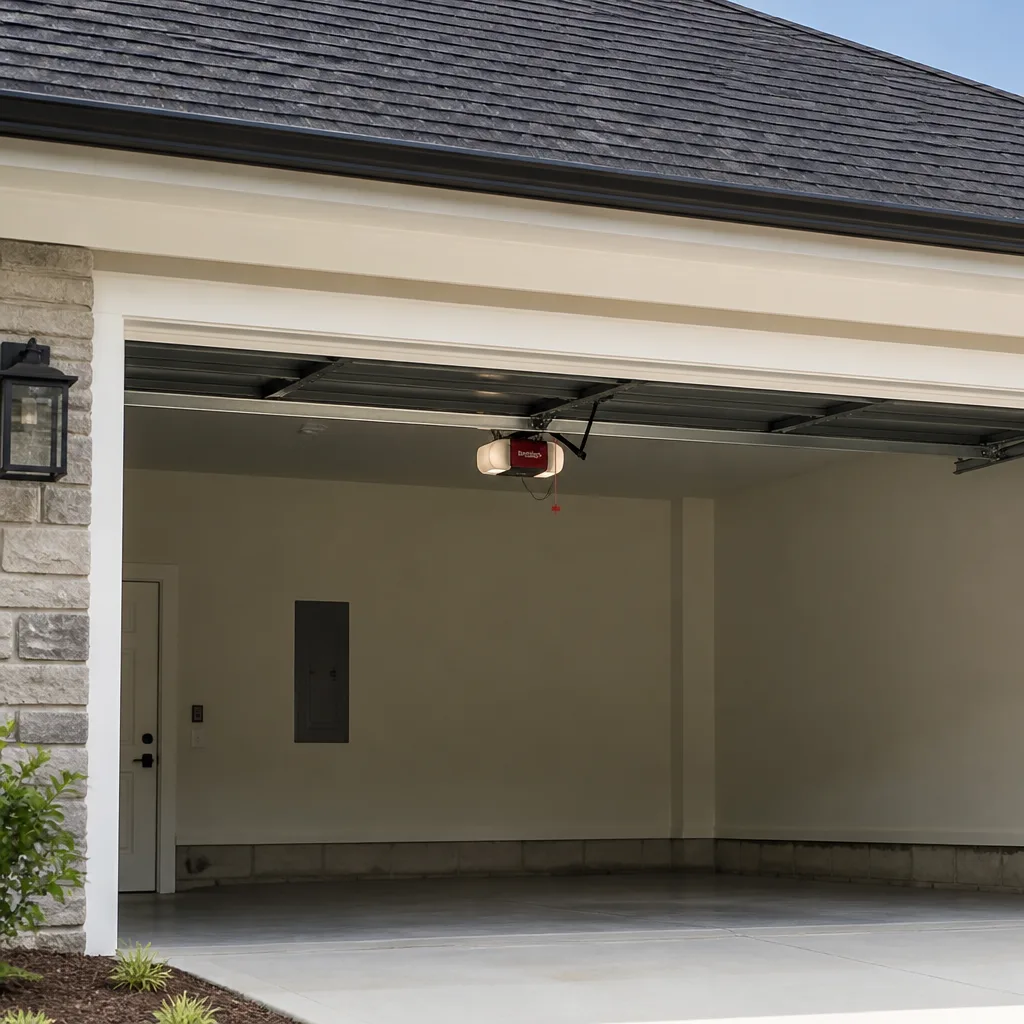 LiftMaster openers
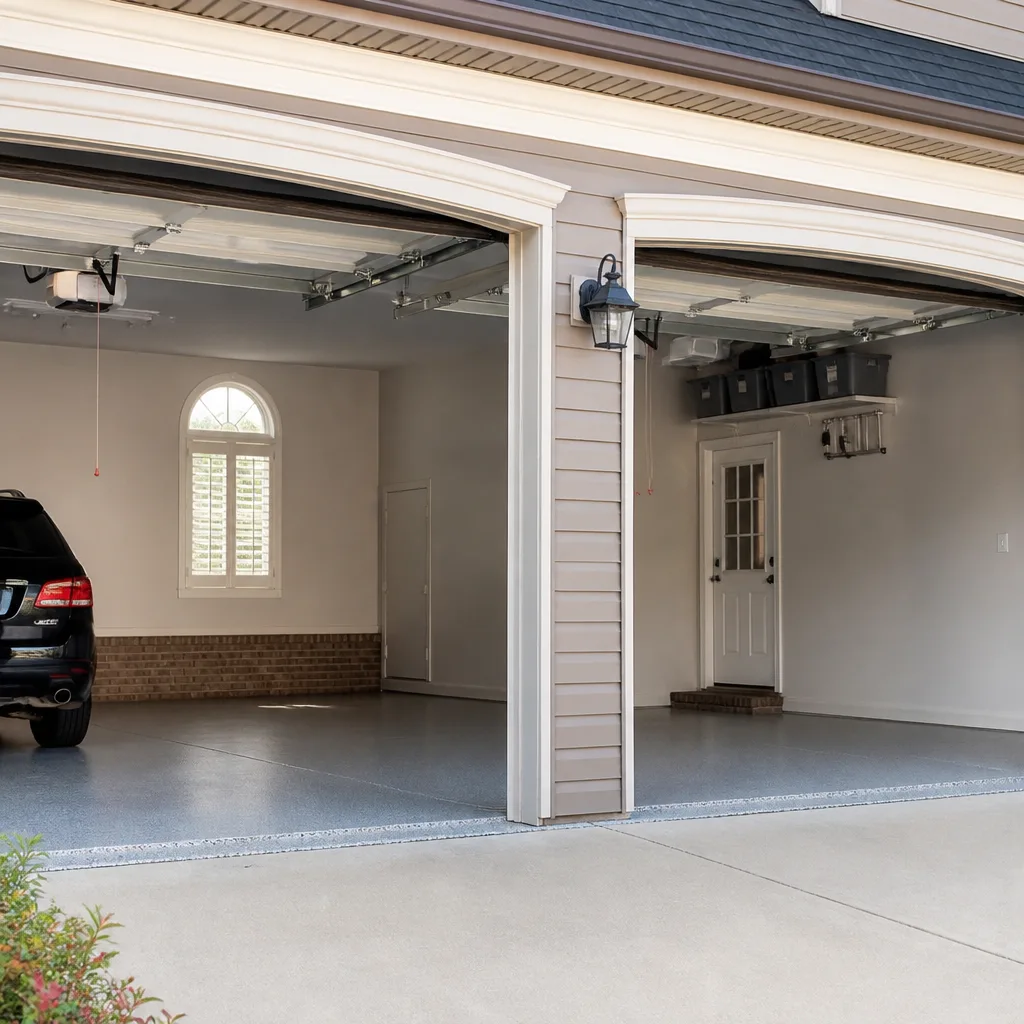 Chamberlain openers
Full 25-point door and opener safety check with every visit - springs, cables, rollers, tracks, and your LiftMaster or Chamberlain opener included
You get a price before we start. It does not change when the pro arrives.
Get your free estimateDIY vs Professional Garage Door: The Buckhead Homeowner’s Decision Guide
Some garage door tasks are legitimately DIY-friendly. Torsion spring replacement is not one of them – not because it’s complicated, but because a single miscalculation releases 150+ foot-pounds of torque instantly. The line between the two categories is sharper than most guides admit, and where you land on it decides more than a Sunday afternoon. In this guide, we sort every common garage door job into three columns – safe DIY, risky DIY, and never DIY – and explain the specific reason behind each call. We also cover how DIY work affects homeowner’s insurance claims, what voids manufacturer warranties on springs, openers, and panels, and the real math on a DIY mistake versus professional installation. Buckhead homeowners deserve a straight answer, so here it is.
Quick Answer
Routine maintenance like lubrication, visual inspections, and tightening exposed bolts are safe to do yourself. Torsion spring work, cable replacement, and opener electrical repairs should always go to a professional, because the stored energy and electrical risk make DIY dangerous and can void warranties or complicate insurance claims. Most homeowners in Buckhead should handle the light upkeep and call a specialist for anything involving springs, cables, or the opener’s internal wiring.
Styles & brands we work with
- Raised-panel steel
- Carriage house
- Modern flush
- Full-view glass
- LiftMaster openers
- Chamberlain openers
Table of Contents
- The Three-Column Test: Safe, Risky, and Never DIY
- How DIY Garage Door Work Affects Homeowner’s Insurance
- Manufacturer Warranty Language: What Voids Coverage
- The Real Cost of a DIY Mistake vs. Professional Installation
- What a YouTube Tutorial Prepares You For (and What It Misses)
- Buckhead Climate and Your Garage Door
- When to Call a Professional
- Frequently Asked Questions
The Three-Column Test: Safe, Risky, and Never DIY
Not every garage door task carries the same weight. The useful question isn’t “Am I handy enough?” – it’s “What happens if I get this wrong?” That single reframe sorts every job into one of three buckets. Here’s how we categorize the work we see across Buckhead.
Safe DIY (no stored energy, no electrical hazard)
- Lubricating hinges, rollers, and tracks – a few drops of garage door lubricant twice a year keeps everything moving quietly and costs almost nothing.
- Visual inspection of springs, cables, and rollers – look for gaps in springs, frayed cables, or worn rollers. You’re observing, not touching.
- Tightening exposed bolts on the track brackets – hand-tight is enough. Don’t overtighten and strip the metal.
- Testing the safety reverse – place a roll of paper towels under the door and confirm it reverses on contact.
- Cleaning and painting the door panels – cosmetic work that doesn’t touch the mechanical system.
- Replacing the opener remote battery or reprogramming a remote – straightforward on LiftMaster, Chamberlain, and Genie units, and the manual walks you through it.
Risky DIY (possible, but with real consequences)
- Replacing a bottom weather seal – doable, but if the door is out of balance you’ll discover it the hard way.
- Adjusting the opener’s travel limits or force settings – a mis-set limit can cause the door to reverse mid-travel or crush an object. Small mistakes, serious results.
- Replacing rollers – manageable if you know how to support the door safely, but a door that slips off a roller can come down hard.
- Realigning a slightly bent track – often better left alone. Tracks that are bent beyond a small nudge usually mean a panel or roller problem underneath.
Never DIY (stored energy or high voltage)
- Torsion spring replacement or adjustment – these springs store enough torque to cause severe injury. There is no safe homeowner version of this job.
- Extension spring replacement – slightly less tension than torsion but still stored energy under load.
- Cable replacement – cables are under extreme tension and can whip when released.
- Opener internal electrical repair or capacitor replacement – high voltage and stored charge.
- Replacing a full door panel or section – panel weight and alignment make this a two-person professional job.
If a task lands in the third column, that’s not a judgment on your skills. It’s physics. We handle garage door spring repair in Buckhead as a dedicated service precisely because the risk doesn’t match the reward for a homeowner.
How DIY Garage Door Work Affects Homeowner’s Insurance
Homeowner’s insurance doesn’t usually care who did the work – until there’s a claim. If a garage door you repaired yourself fails and damages property or injures someone, your insurer will investigate the cause, and DIY work that doesn’t meet code or manufacturer spec can complicate the claim. In some cases, an insurer may deny coverage entirely if the failure traces back to unpermitted or improper work. That’s not a scare tactic; it’s how most standard policies define “faulty workmanship” exclusions.
Here’s what typically happens in a claim scenario:
- The adjuster asks who performed the work. If you did it yourself and the work led to the damage, the claim can be flagged.
- The adjuster asks whether a permit was required. In most Georgia jurisdictions, replacing a garage door or opener doesn’t require a permit, but structural changes or electrical work often do. Ask your city’s building department if you’re unsure.
- Coverage depends on the “faulty workmanship” clause. Many policies exclude damage caused by your own improper repair.
- Injury to a visitor is separate. If a guest is hurt by a door you worked on, your liability coverage may still apply, but the investigation will focus on whether the work met reasonable standards.
The general rule we share with homeowners in Buckhead: if the task touches springs, cables, or wiring, let a licensed professional handle it and keep the invoice. That paper trail matters far more than the money you saved.
Manufacturer Warranty Language: What Voids Coverage
Here’s where DIY really costs you. Manufacturer warranties on springs, openers, and panels are specific about what voids coverage, and improper installation is almost always on the list. Most homeowners don’t read that language until something fails.
Springs
Torsion and extension spring warranties typically cover defects in materials and workmanship – but not damage from incorrect installation, improper tensioning, or modification. If a professional installs the spring correctly and it fails inside the warranty window, you’re covered. If you install it yourself and it fails, the manufacturer will usually decline the claim, and there’s no paper trail showing proper installation.
Openers (LiftMaster, Chamberlain, Genie)
Opener warranties cover motor and electronics defects. They don’t cover damage from incorrect wiring, reversed polarity, or force-setting misuse. Some manufacturers will ask for proof of professional installation before honoring a warranty claim on a failed opener, especially on higher-end units.
Panels (Clopay, Amarr)
Panel warranties cover finish and structural defects. Improper installation that stresses a panel or misaligns the track can void coverage on the affected section. For full-door replacement, most manufacturers expect installation to follow their published specs.
The pattern holds across every brand we work with: the warranty protects the product, not the installer. When you have a professional install, the work and the paper trail stay aligned.
The Real Cost of a DIY Mistake vs. Professional Installation
Here’s the math most DIY guides skip. Torsion spring repair typically runs $180-$340 per spring in the Buckhead market. A matched pair, which is usually what needs replacing together, runs roughly twice that – $360-$680 for the pair, typically. A professional installation also includes balancing the door, testing the safety reverse, and confirming the opener’s force settings are right, all of which protect the door and the warranty.
A DIY spring failure is a different story. The failure itself might damage the door panels, the track, or the opener. If the door comes down unexpectedly, it can damage whatever is underneath and, in the worst case, injure someone. The repair bill for a damaged panel plus track plus opener often lands well above the cost of a professional spring replacement, and none of it is covered by warranty if the spring was installed improperly.
Run the numbers on your own door:
- Professional spring replacement: $180-$340 per spring, $360-$680 for a typical pair, with a written estimate up front.
- DIY spring kit: $50-$150 for the springs themselves, plus winding bars and time – but with no warranty coverage and no balancing or safety check.
- Post-failure repair: panel damage, track damage, or opener damage often pushes the total into four figures, and none of it is covered when DIY caused it.
The math usually surprises people. The upfront savings from DIY are real, but so is the downside risk. Our garage door repair estimates are free and written, so you can compare the real cost side by side before you decide.
What a YouTube Tutorial Prepares You For (and What It Misses)
A good tutorial prepares you for the vocabulary – torsion spring, cable drum, winding bar, safety reverse, travel limit. It shows you what a properly installed spring looks like and why a gap in the coil matters. That context is genuinely useful, and it makes you a more informed customer when you do call a pro.
What video can’t convey is tactile calibration. When a technician winds a torsion spring, the feel of the winding bar tells them how much tension is left and whether the spring is nearly at its limit. You can’t learn that from watching; it comes from repetition under supervision, and it’s the difference between a balanced door and one that comes down hard six months later.
Video also misses:
- The sound of a healthy door. Experienced technicians hear a roller or cable problem before they see it. A video can’t teach that.
- The feel of a correctly balanced door. A balanced door should hold position when released halfway up. You feel this, you don’t watch it.
- The safety reverse test under load. Testing a door with nothing under it and testing it with a full load are different exercises, and the second one is what actually confirms the safety system works.
- What “good enough” looks like when the door is almost right. The last inch of adjustment is where most DIY jobs fail, and it’s not visible on camera.
If you’ve watched the tutorials and still feel uncertain, that’s not a failure – that’s the honest answer. The technicians who work with us have up to 12 years of experience, and most of them learned the tactile parts on the job, not on a screen.
Buckhead Climate and Your Garage Door
Buckhead’s summers are hot and humid, and that combination is hard on a garage door. Metal panels expand in the heat, wood panels swell, and springs wear faster when the door runs through daily temperature swings. Humidity accelerates roller wear and can cause opener circuit boards to fail faster than they do in drier climates. The climate also means the maintenance side matters more here than in cooler parts of the country. Lubricating twice a year, checking the weather seal before spring, and watching for rust on the bottom panel are all worth the ten minutes. Those are safe DIY tasks, and they extend the life of the door meaningfully. For anything mechanical or electrical, the heat makes the risk worse, not better, and that’s where a Buckhead specialist earns the call.
See the difference
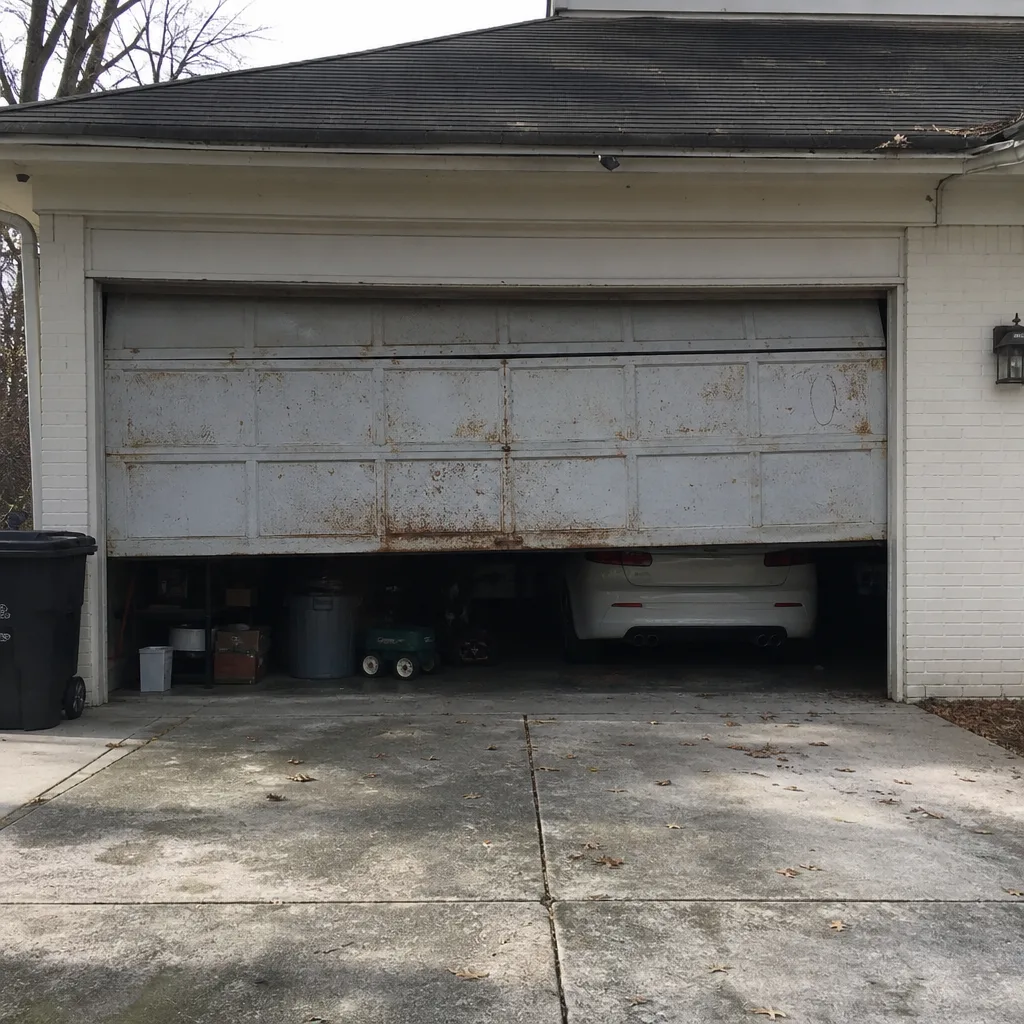 Before
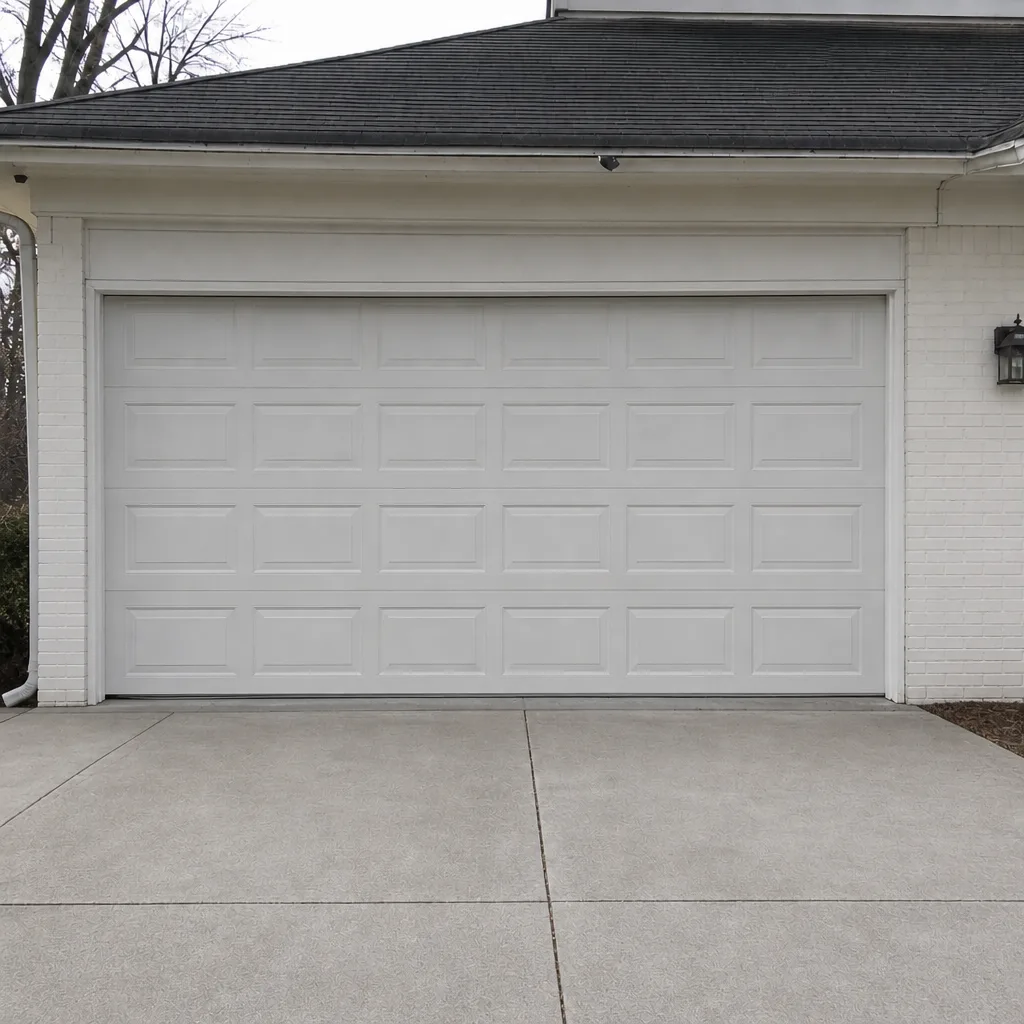 After
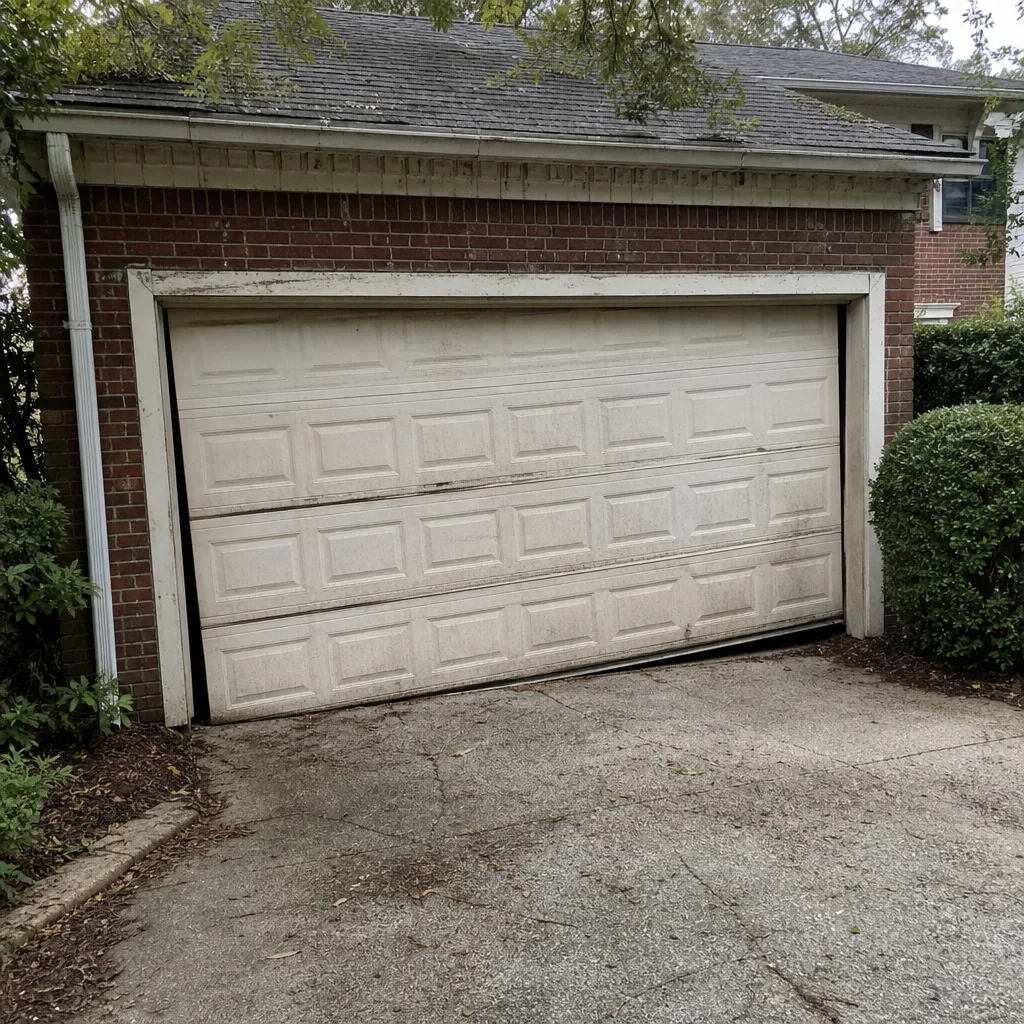 Before
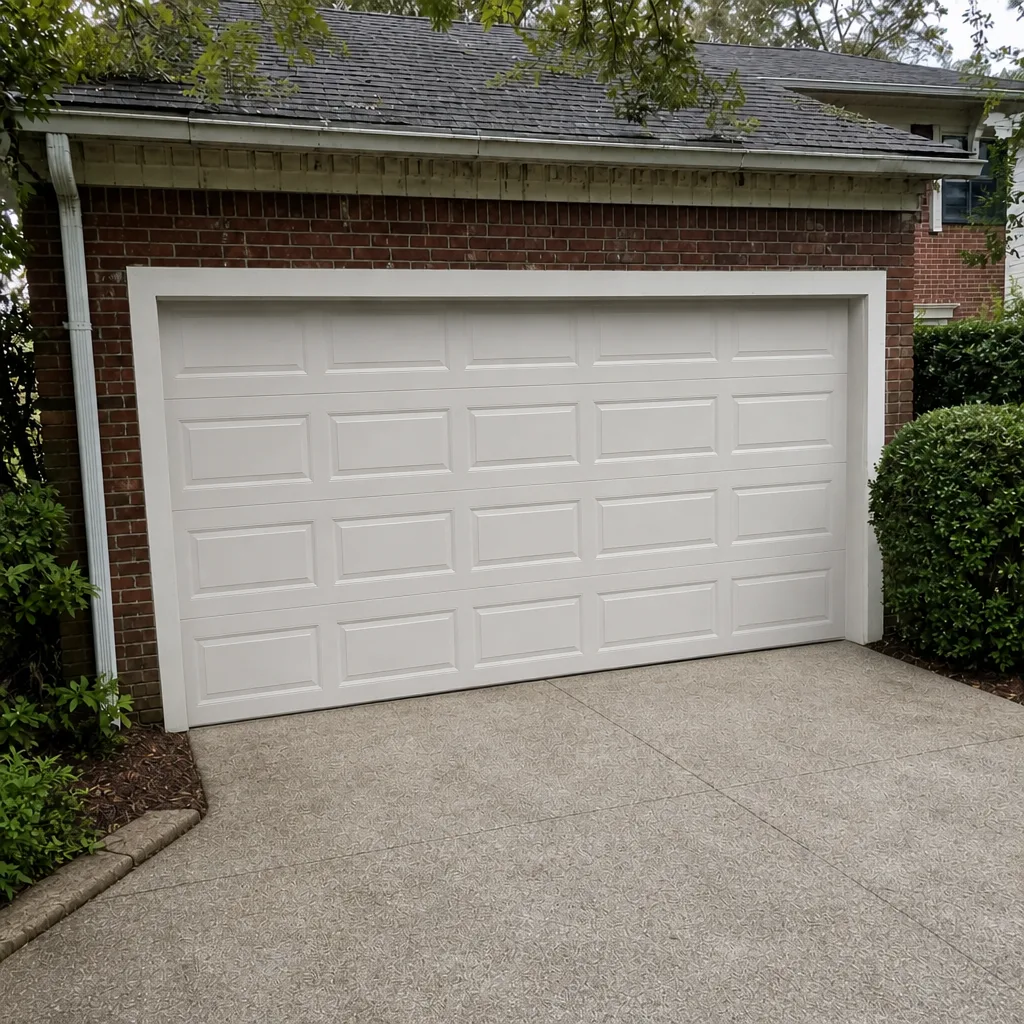 After
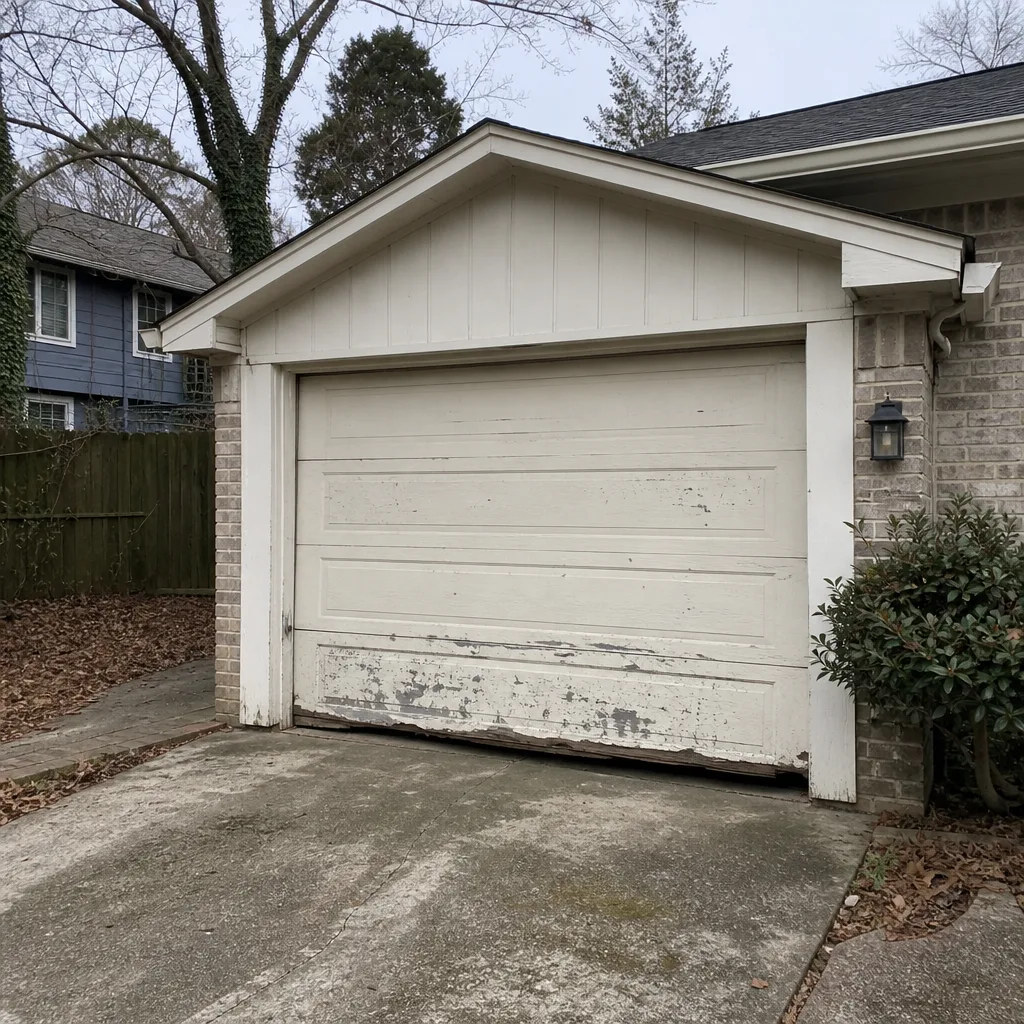 Before
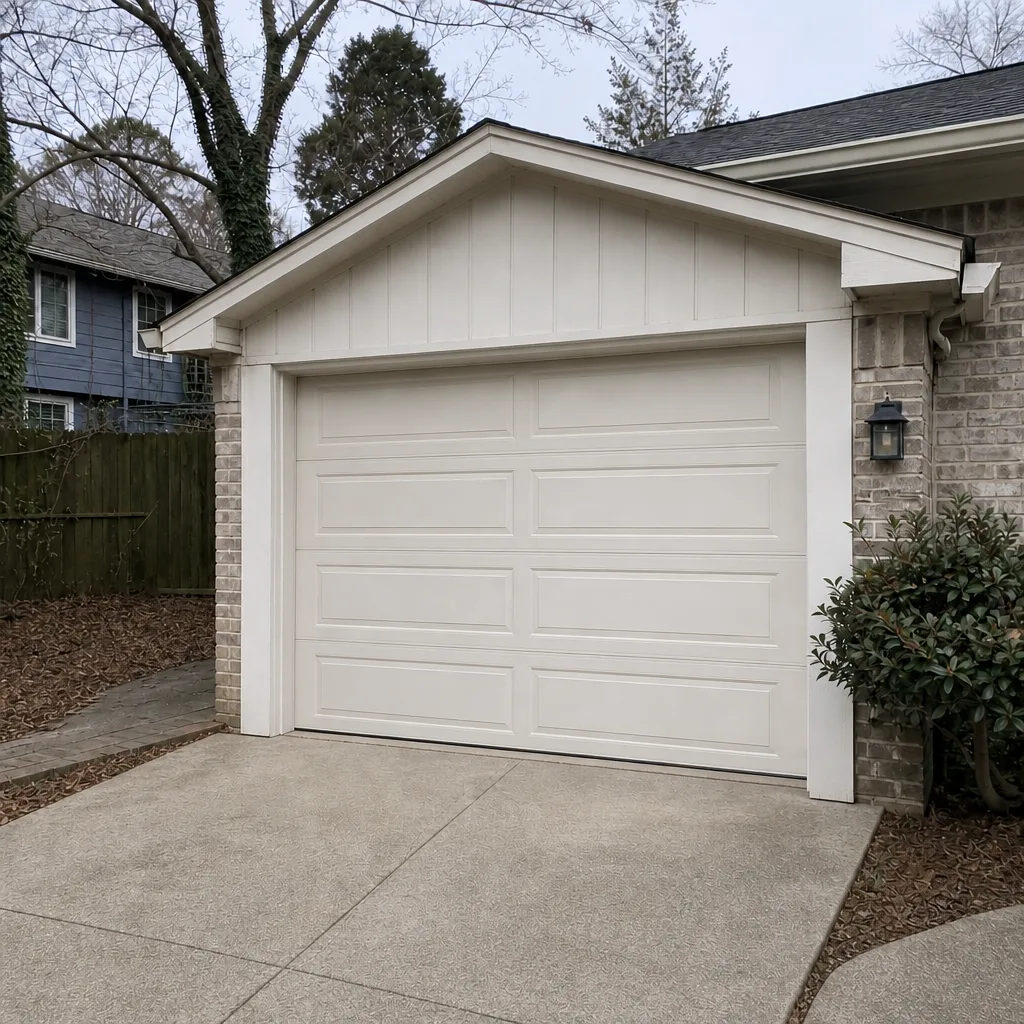 After
Common Mistakes to Avoid
- Winding a torsion spring without winding bars. Using a screwdriver or pliers is the single most common DIY injury we see – the tool slips, the spring releases, and the result is serious. Don’t attempt it.
- Painting the bottom weather seal. Paint locks the seal to the door and the floor, and the door stops sealing. Mask it off before you paint.
- Ignoring a gap in the spring coil. A visible gap means the spring is failing, and the door is one cycle away from a hard drop.
- Overtightening track bolts. Hand-tight is correct. Over-tightening strips the metal and misaligns the track.
- Adjusting the opener force setting to compensate for a stiff door. This masks the real issue (worn rollers, dry hinges, or a failing spring) and removes the safety margin.
- Skipping the safety reverse test. It takes sixty seconds and confirms the door will stop on contact. Test it once a month.
- Assuming Buckhead’s heat is harmless to the door. Panels and springs both wear faster in a hot, humid climate. Maintenance is not optional here.
When to Call a Professional
Call a professional when a task involves springs, cables, high-voltage wiring, or a full panel replacement. Those are the jobs where the risk genuinely isn’t worth the DIY savings. Also call when you notice a gap in the spring, a door that reverses before it closes, a door that won’t stay open, or a loud bang from the garage. Those are signs of a mechanical failure that’s already underway.
Buckhead Garage Door Repair Pros offers free estimates in Buckhead – call (866) 651-6880. We work on the brand you have, from LiftMaster openers to Clopay panels, and we handle garage door opener repair and garage door installation under the same roof. Same-day repair is available for most calls, and the price is quoted and agreed before any work starts. We answer 24/7. Fast dispatch from 7am to 7pm, Sunday through Friday.
Frequently Asked Questions
No, garage door spring replacement is not a safe DIY job in Buckhead or anywhere else. Torsion springs store enough torque to cause serious injury in a fraction of a second, and improper installation can also void your warranty and complicate an insurance claim. Call a specialist.
It can. Manufacturers of springs, openers, and panels typically void coverage when installation doesn’t follow their published specs, and many require proof of professional installation for a warranty claim. Improper installation is one of the most common reasons a warranty claim is denied.
Lubricating hinges and rollers, testing the safety reverse, tightening exposed track bolts, cleaning panels, and inspecting the springs and cables visually are all safe for a homeowner. Anything involving springs, cables, or the opener’s wiring should go to a professional.
Garage door spring repair in Buckhead typically runs $180-$340 per spring, and a matched pair, which is usually replaced together, runs roughly $360-$680. The written estimate sets the final price, and we quote it before any work starts. Call (866) 651-6880 for an exact quote – estimates are free.
Same-day service is available for most repair calls in Buckhead. Call (866) 651-6880. We answer 24/7. Fast dispatch from 7am to 7pm, Sunday through Friday. A call outside dispatch hours is booked into the next opening.
No. We cheerfully provide a written estimate before any work begins, and the price you agree to is the price on the invoice. If we discover additional work is needed, we explain it and get your approval before proceeding.
The local professionals we connect you with are licensed and insured as their state requires. They work on LiftMaster, Chamberlain, Genie, Clopay, Amarr, Wayne Dalton, Craftsman, and Raynor equipment. Our technicians have up to 12 years of experience.
Yes. We work on the brand you have, including LiftMaster, Chamberlain, Genie, Clopay, Amarr, Wayne Dalton, Craftsman, and Raynor. Brand-specific issues are diagnosed without guesswork or generic parts swaps.
The Bottom Line
The DIY versus professional question comes down to one thing: which tasks carry mechanical risk, and which don’t. Lubrication, inspection, and the safety reverse test are safe to do yourself and worth doing regularly in Buckhead’s hot, humid climate. Torsion springs, cables, and opener internal wiring are never DIY jobs, because the risk of injury, the warranty exposure, and the insurance complications all outweigh the savings. If you’re unsure which column a task falls into, that’s a good reason to call rather than guess. The line is sharper than most guides admit, and it’s worth respecting.
When you’re ready for a professional set of eyes on your door, reach out through Buckhead Garage Door Repair Pros or call (866) 651-6880 for a free estimate. We answer 24/7. Fast dispatch from 7am to 7pm, Sunday through Friday.
Written by the team at Buckhead Garage Door Repair Pros.