
Last updated November 21, 2026
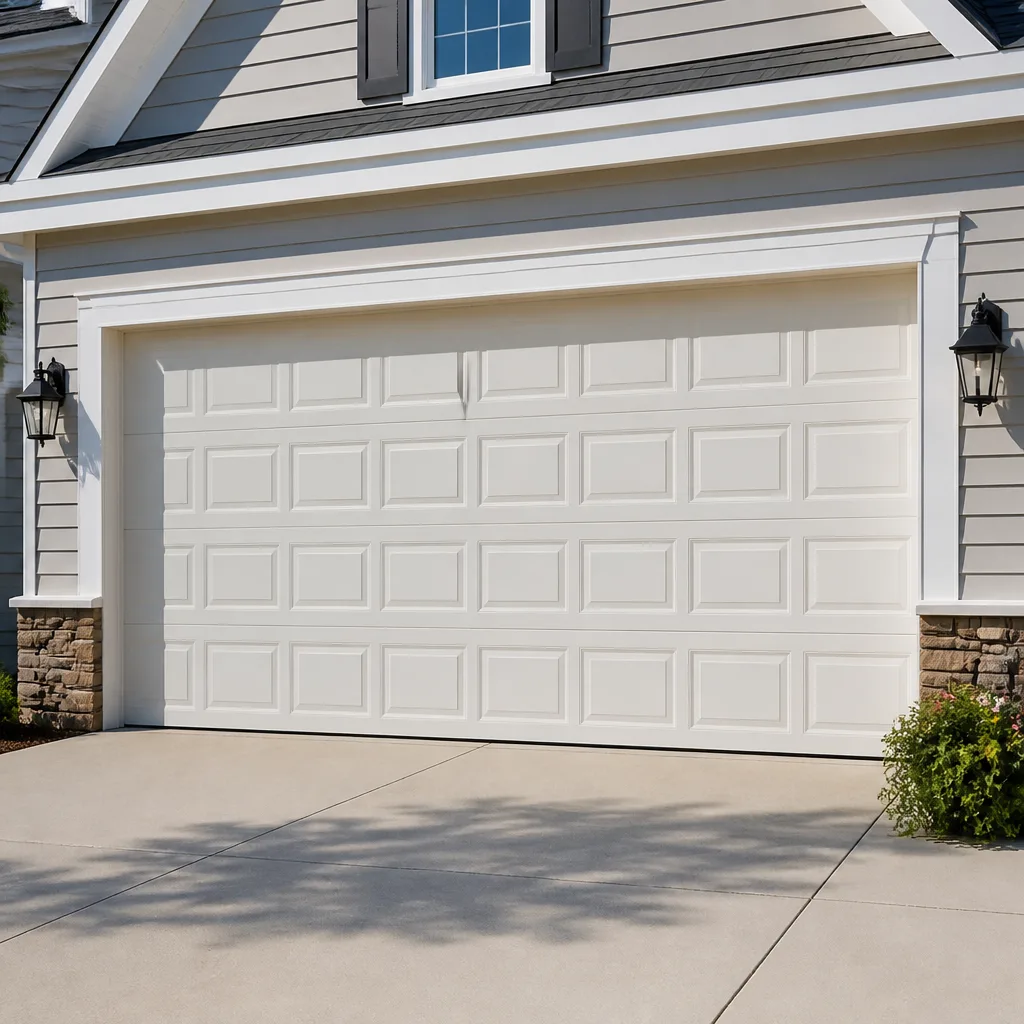 Raised-panel steel
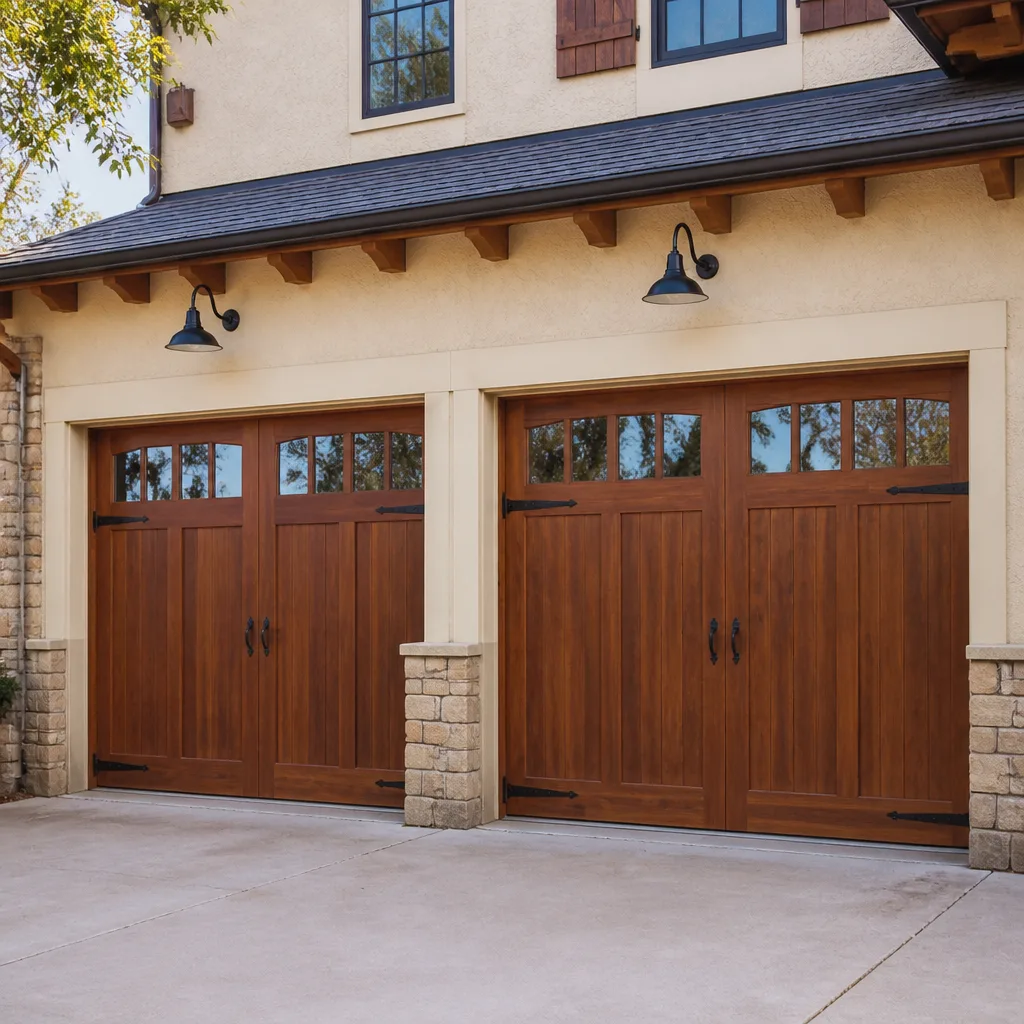 Carriage house
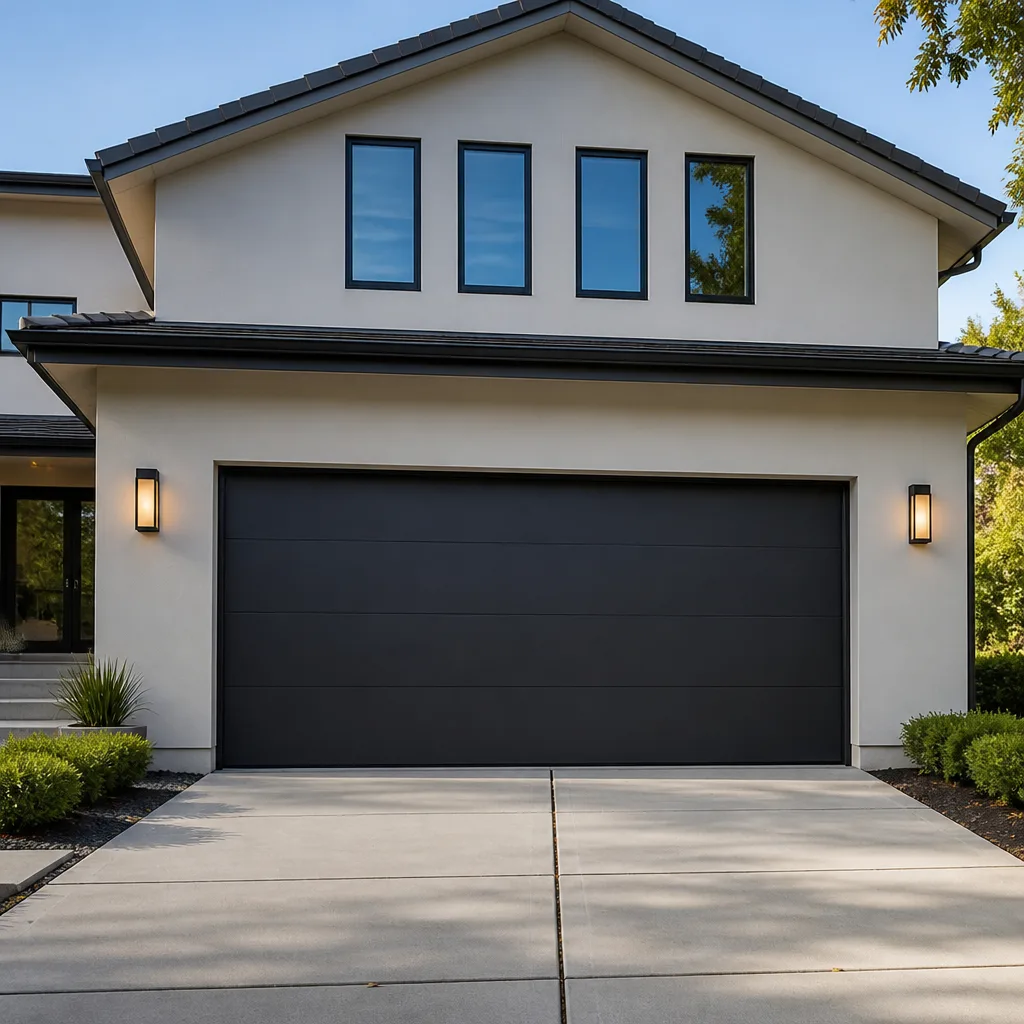 Modern flush
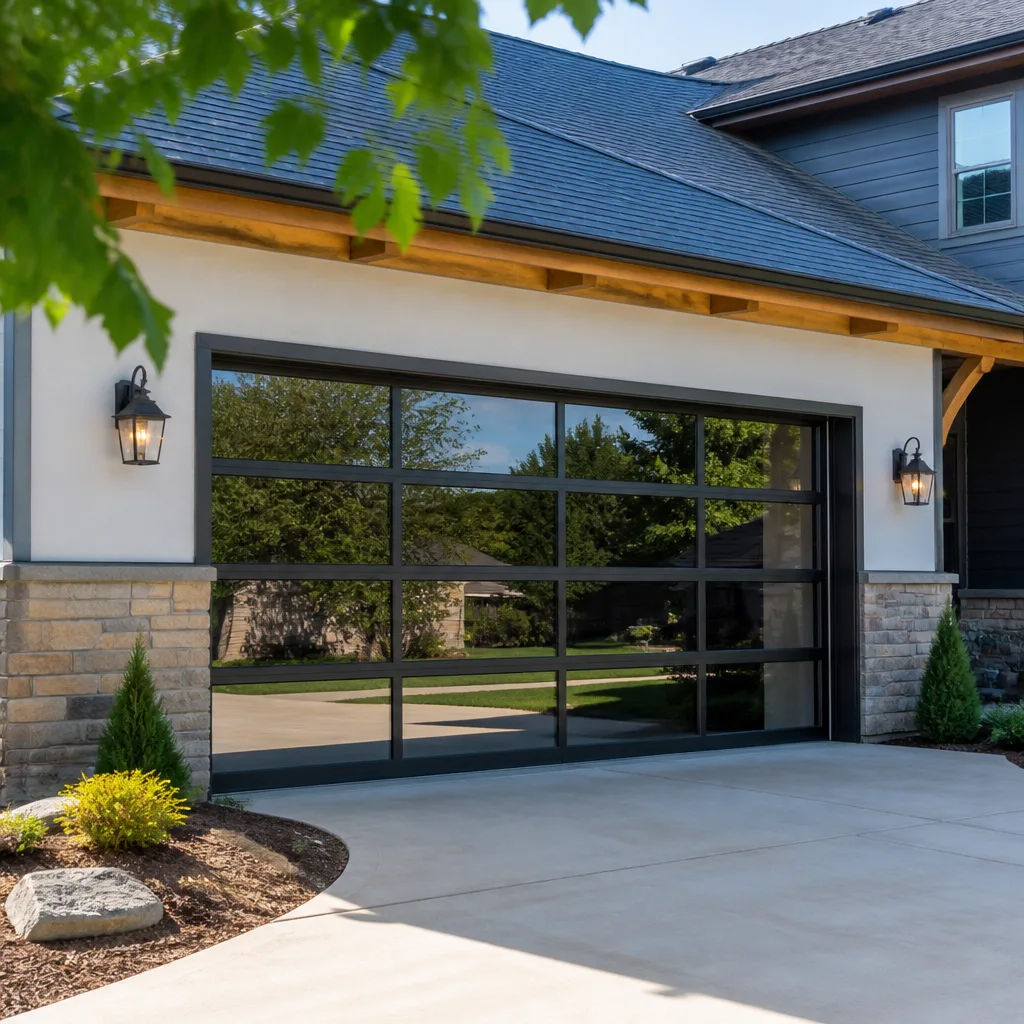 Full-view glass
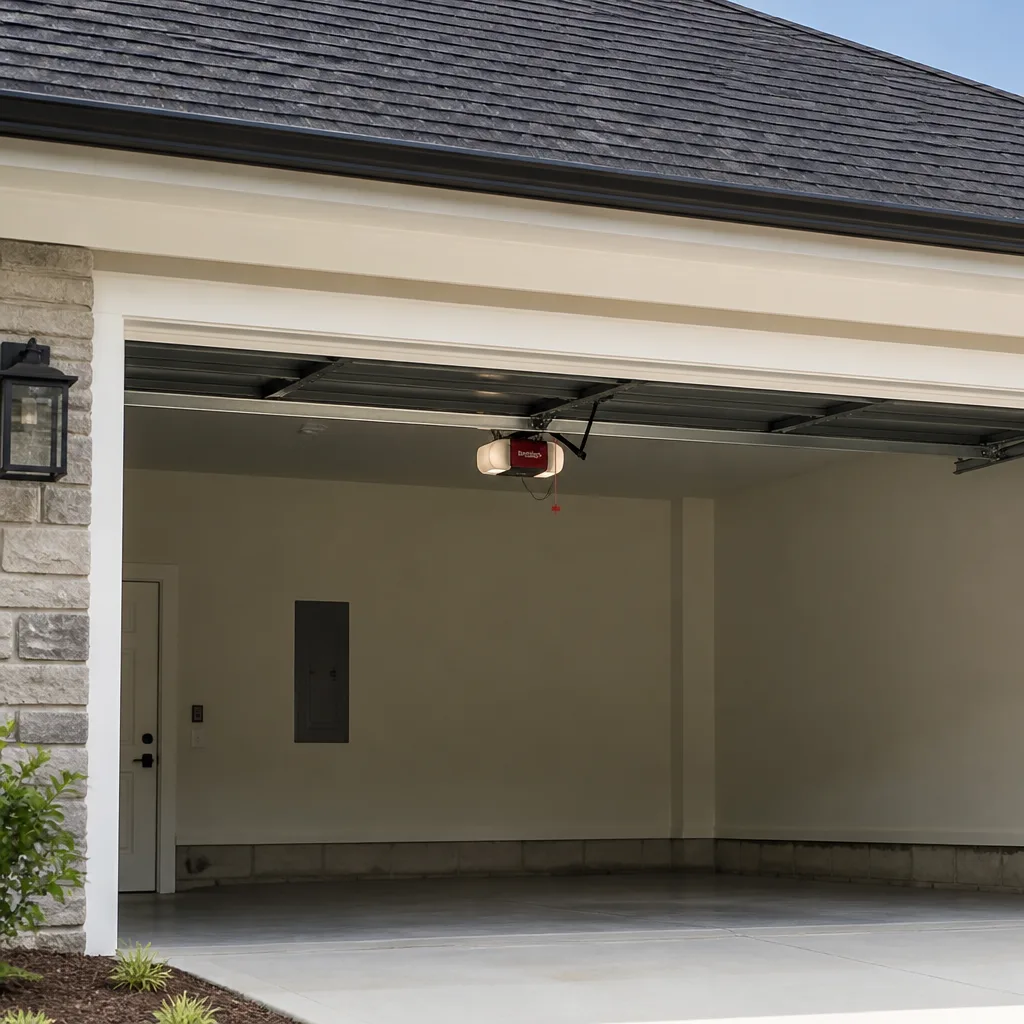 LiftMaster openers
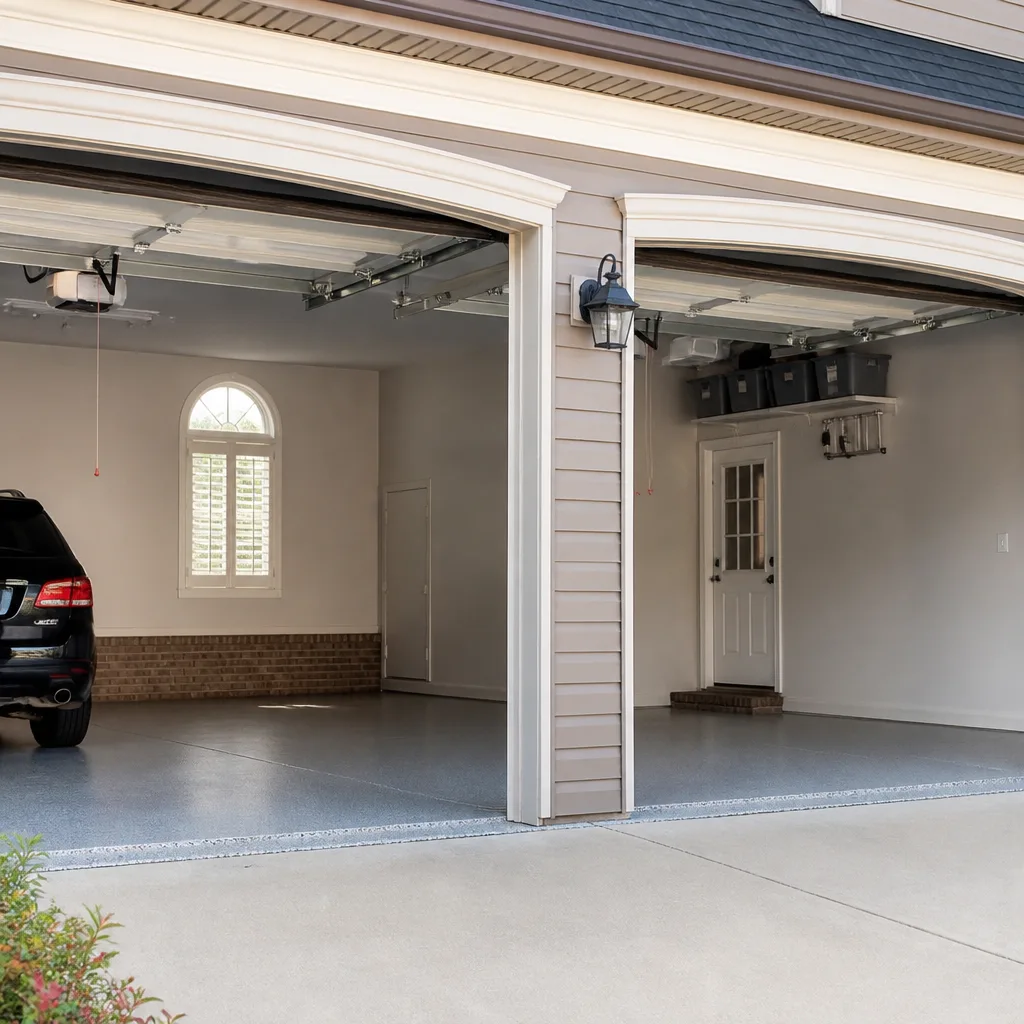 Chamberlain openers
Full 25-point door and opener safety check with every visit - springs, cables, rollers, tracks, and your LiftMaster or Chamberlain opener included
You get a price before we start. It does not change when the pro arrives.
Get your free estimateSeasonal Garage Door Care for Buckhead: Year-Round Homeowner’s Guide
Generic seasonal garage door guides split the year into four equal parts. In Buckhead, that calendar is wrong. Summer humidity alone accounts for more than half of annual wear on springs, cables, and weatherstripping, so the season that actually breaks your door is the one most guides spend the least time on. A mild, damp winter and two narrow transition windows do the rest of the damage, usually within days of the temperature swinging from a hard freeze to something close to shirtsleeves.
Here’s what this guide covers: how torsion spring tension behaves across a 28°F to 95°F swing, where summer condensation attacks your cables, why leaf and pollen debris seals your bottom weatherstrip shut before the real cold arrives, the two-week window after the first hard freeze when weatherstripping cracks, and how spring pollen blinds photo-eye sensors across Buckhead. You’ll finish with a month-by-month checklist you can actually follow.
Quick Answer
Garage door care in Buckhead should follow the real local calendar, not four equal seasons: check springs and balance in the two transitional windows (late fall and early spring), protect cables and weatherstripping from humidity through the long summer, clear leaf and pollen debris in fall before it reaches the bottom seal channel, and inspect weatherstripping and photo-eye sensors right after the first hard freeze and again during spring pollen. Most failures we see at Buckhead Garage Door Repair Pros trace back to a missed transition window, not sudden bad luck.
Styles & brands we work with
- Raised-panel steel
- Carriage house
- Modern flush
- Full-view glass
- LiftMaster openers
- Chamberlain openers
Table of Contents
- Why the Buckhead Garage Door Calendar Isn’t Four Equal Seasons
- Summer: Condensation, Cable Corrosion, and the Long Grind
- Fall: Leaf and Pollen Debris Before the First Freeze
- The Two-Week Window After the First Hard Freeze
- Spring Pollen and Your Photo-Eye Sensors
- Spring Temperature Swing: The 28°F to 95°F Tension Question
- The Buckhead Month-by-Month Checklist
- Common Mistakes to Avoid
Why the Buckhead Garage Door Calendar Isn’t Four Equal Seasons
Buckhead doesn’t get four equal seasons. It gets one long, punishing summer, a short and damp winter, and two narrow transition windows where the temperature and humidity move fast enough to stress moving parts before your door has a chance to adjust. Understanding that shape is the difference between doing seasonal care and doing seasonal care that actually prevents breakdowns.
Think about what a garage door actually is: a set of high-tension springs, cables, rollers, hinges, and a weatherseal, all working in a non-climate-controlled box attached to your house. The box is cold and damp in winter, hot and humid in summer, and the door is expected to move reliably every single day regardless. In a mild climate, the parts move within a narrow band of temperature and moisture, so they last a long time. In Buckhead, the same parts experience a legitimate 28°F to 95°F annual swing and heavy seasonal humidity, and they wear accordingly.
The calendar consequences are concrete:
- Summer is not a quiet season. Condensation inside the garage is at its worst, cable corrosion accelerates, and weatherstripping softens.
- Fall is a debris season, not just a cooling-off season. Tree litter and pollen get into the bottom seal channel and the track, and stay there.
- The first hard freeze is the trigger. Weatherstripping that was soft through summer hardens and cracks in the two weeks after temperatures drop.
- Spring is a pollen season. A fine coating of yellow-green pollen settles on everything, including the photo-eye sensors that tell the door not to close on someone.
Each of these is a specific job at a specific time of year. If you work them into the calendar the way Buckhead actually works, you’ll catch most failures while they’re still adjustments rather than repairs. That matters at the invoice level too, because a small adjustment made early is cheaper than a spring or cable replacement done after a failure: spring replacement in the local market typically runs $180-$340 for a single spring, and matched pairs are usually replaced together, so a pair runs roughly double that. Everything is priced by written estimate before any work begins, so you’ll know the number up front.
Summer: Condensation, Cable Corrosion, and the Long Grind
Summer is where more than half of your annual wear on springs, cables, and weatherstripping happens, and the primary culprit is condensation. A Buckhead garage in July and August cycles moist outside air against cooler surfaces, and moisture collects on metal. Your cables are drawn, oiled steel under tension, running over pulleys and drums; condensation on those surfaces is exactly the environment that starts corrosion.
What to watch for, and what to do about it, without installing a full dehumidification system:
- Look at the cables themselves. With the door closed and while it’s safe to look from a distance, inspect the cable for a rough, dull, or discolored surface. A bright, evenly-oiled cable is healthy; one that looks matte or has a fine powdery orange tint is beginning to corrode.
- Keep the garage ventilated. A cracked side window or a self-closing exterior door left propped open during dry days lets the moist air out. Don’t prop the main overhead door open all night; a garage door held open loses weatherseal tension and invites pests.
- Keep the floor dry. Standing water from a leaky hose bib, a wet car, or a slow drain never evaporates in August humidity. It feeds the moisture level in the whole space.
- Check the weatherstripping. Soft, pliable rubber seals a door; brittle, discolored, or sticky-to-the-touch weatherstripping has absorbed too much moisture and needs to be watched.
- Have a technician service the moving parts once, before the season. Lubricating rollers, hinges, and the torsion assembly with the right product in early summer slows the corrosion cycle through the whole season.
If your opener’s firmware includes a moisture-sensitive safety sensor or the door struggles to close in the hottest weeks, that’s often a limit-adjustment issue accelerated by heat and humidity, which garage door opener repair can address. We’re factory-familiar with the major opener brands, including Genie, LiftMaster, and Chamberlain, so a heat-related adjustment is a known diagnosis, not a guess.
One safety note about the torsion assembly: do not attempt to adjust, loosen, or replace the springs yourself. They’re under extreme tension, and an incorrect release can cause serious injury. If you hear a metal snap, or the door suddenly needs to be lifted much harder than before, call it in rather than touch it.
Fall: Leaf and Pollen Debris Before the First Freeze
Buckhead has mature trees everywhere, and fall is when the debris load is heaviest. Leaves, seed pods, and the last of the pollen blow under the door, into the track, and into the bottom seal channel, and that’s where the trouble starts. A channel packed with debris can’t seat the weatherstripping correctly, and the same debris holds moisture against the seal long after the leaf itself is gone.
The fall task list:
- Clear the bottom seal channel. Lift the rubber weatherstrip gently along the bottom edge and clear out any accumulated debris. Don’t force it; if the seal is brittle or cracked, it’s already failing and shouldn’t be forced open.
- Sweep the track run. Run a stiff brush along the horizontal track and the vertical in the corners. Debris in the track doesn’t just scratch rollers, it can throw the door slightly off angle, which stresses cables.
- Look up. Leaves and pollen collect on the top of the door panel and on the tracks above it; clear it before it turns into a damp, decaying mess against the metal.
- Test the balance of the door. Disconnect the opener if your door has a manual release, lift the door about halfway, and let go. A properly balanced door stays put; one that drifts down or up needs an adjustment. Do not attempt a spring adjustment yourself; this test is a diagnostic, not a repair.
- Check the photo-eye sensors for a light film of pollen or grit, which happens even in fall. Wipe them with a soft cloth and then test that the door reverses when something breaks the beam.
The reason this matters now rather than in December is that the first hard freeze arrives and finds the bottom seal already compromised. A bottom seal that’s been sitting on damp leaf debris all fall will fail much faster once the temperature drops, and by February the seal is often the thing that lets cold air and water in under the door. Getting the track and the seal channel clean in October or early November buys the seal months of life.
The Two-Week Window After the First Hard Freeze
Most Buckhead homeowners discover their weatherstripping has failed in the two weeks after the first hard freeze. That’s not a coincidence. Rubber and vinyl weatherstripping that stays soft through a humid summer hardens when the temperature drops significantly and often cracks or curls when it does. The window between the freeze and the next warm-up is when you’ll see the gaps.
Here’s how to check, in the two-week window:
- Walk the perimeter of the door with a flashlight at night. A fine strip of light is the easiest way to see a gap the weatherstripping no longer seals.
- Run your fingers lightly along the bottom seal. It should be soft and give a little. If it’s rigid, cracked at the edges, or has come away from the door, it needs replacing.
- Look at the side and top jamb seals. These are often forgotten. They take the same cold-weather hardening and show the same cracks.
- Check for moisture inside the garage after a cold, rainy day. Water near the door line is a direct sign the seal has failed.
- Listen for the door. A door that squeaks or shudders as it opens and closes when the temperature drops is likely dealing with frosted or hardened rollers and a stiff seal. Lubrication with a cold-rated product helps; a seal replacement is a different job.
Weatherstripping is one of the cheapest parts of the door to replace and one of the highest-value checks to make. It’s also a place where brand familiarity matters more than homeowners expect. Some panels and seals are proprietary to the door manufacturer’s design, and the right fit comes from knowing the system. We work on Clopay, Amarr, and Wayne Dalton doors, among others, and matching the right replacement seal to the original door avoids the “close enough” fit that fails again by the next freeze.
If the door has stopped moving entirely during cold weather, or the springs sound wrong, that’s an emergency. Garage door repair is exactly the job for it, and we treat cold-weather emergency calls as core work, not an upsell. We answer 24/7 and offer fast dispatch from 7am to 7pm, Sunday through Friday. A call outside dispatch hours is booked into the next opening.
Spring Pollen and Your Photo-Eye Sensors
Spring pollen in Buckhead is a real and specific problem for garage doors because the photo-eye sensors near the floor collect a fine, sticky coating of yellow-green pollen, and that coating is enough to block the infrared beam. When the beam is blocked, the door won’t close, or it reverses the moment it starts down. It’s one of the most common “the door is broken” calls we take each spring, and it’s usually not a failure at all.
The workaround is simple and worth building into the spring routine:
- Locate the two sensors. They’re the small units mounted to the track near the floor on each side of the door, usually with a small LED on each.
- Wipe both lenses with a soft cloth. No solvents, no abrasive pads. A slightly damp microfiber cloth is enough.
- Check the sensor alignment. If one LED is off or flickering after cleaning, the sensors may have been nudged out of alignment, which can happen when the door track shifts in seasonal temperature swings.
- Test the reversal. With the door open and the opener on, pass a hand or an object through the beam. The door should reverse. If it doesn’t, stop and have it looked at: the safety reversal is the feature that prevents the door from closing on a child or a pet.
Pollen also settles onto the opener’s safety sensors and the lenses of older Genie and Chamberlain systems, and a spring tune-up is a natural time to have the whole safety system checked. This is also a good season to look at the opener’s battery backup, if it has one, since a failing battery often shows up during the first power blip of spring.
Spring Temperature Swing: The 28°F to 95°F Tension Question
Here’s the part most guides skip. Your torsion spring’s tension doesn’t just depend on how much it’s been used; it responds to temperature. Metal expands with heat and contracts with cold, and the spring is doing its work against those changes. In Buckhead, the same spring can be operating in a 28°F garage in January and a 95°F garage in July, and the difference in how it behaves is real.
What that means for you:
- Cold mornings can make the door feel heavier. A door that lifts easily at 75°F may feel sluggish at 30°F. That’s the spring and the cold metal working together, not usually a failure in itself.
- The door should still be balanced in every season. If it isn’t, the spring wasn’t adjusted for the door’s actual weight and geometry, and it’s worth having it looked at before something wears out faster than it should.
- The real adjustment window is the two transition periods. Late fall, as temperatures start dropping consistently, and early spring, as they rise. Those are the times when a technician can check the balance and make any adjustment needed without chasing a moving target.
- Don’t adjust the spring yourself. This is not a homeowner task. The tension stored in a torsion spring is severe enough that a wrong move can cause serious injury, and it’s the reason dedicated spring work is a specialist job.
When it does fail, spring replacement in the Buckhead market typically costs $180-$340 for a single spring. Most doors have two springs that are matched to each other, and they’re usually replaced as a pair, so expect roughly double that for a matched pair. That’s a quoted estimate based on what the job actually is, and you’ll get a written price before any work starts. No surprises on the invoice.
If you’ve heard a loud metallic snap from the garage, or the door suddenly won’t lift at all, stop using the opener and call for spring repair. The spring is under load even when the door is down, and continuing to run the opener against a broken spring can damage the opener and create a genuine safety risk.
The Buckhead Month-by-Month Checklist
This is the version of the calendar that actually fits Buckhead, laid out so you can follow it. Adjust the exact weeks to the weather in a given year, but don’t skip a step.
- Late winter / early spring (the first warm-up): walk the door, test the balance, clean the photo-eye sensors after pollen starts, check that the opener reverses correctly, and clear anything sitting in the track.
- Spring (pollen season): wipe the sensors weekly during the worst of it, check the opener battery backup, listen for new noises, and book an opener check if the door has started to hesitate or reverse without cause.
- Early summer (before the humidity peaks): have moving parts lubricated, inspect the cables for the first sign of corrosion, check the weatherstripping for softness, and clear any standing water near the door.
- Mid-summer: watch for cable discoloration and any new resistance when the door opens. Keep the garage ventilated on dry days, and don’t ignore a door that reverses on its own in the hottest weeks.
- Fall (before the first freeze): clear the bottom seal channel and the track, look for debris on the top of the door, and repeat the balance check.
- After the first hard freeze (the two-week window): flashlight-check the perimeter at night, feel the weatherstripping for hardening and cracks, look at the side and top jamb seals, and check for water inside the door line.
- Any time a symptom appears: a snapped spring, a door that won’t close, a cable that looks rough, or a door sitting crooked. Don’t wait for the season to change. Call for an assessment.
The one thing you don’t do at any point in this calendar is adjust or replace a torsion spring, a cable, or the opener’s internal limit mechanism yourself. Those are the safety-critical parts of the system, and they’re where the specialist gap between us and a general handyman shows most.
Common Mistakes to Avoid
- Treating the door as a four-season system. Buckhead doesn’t have four equal seasons. Booking a single annual tune-up in, say, spring, misses the fall debris window and the post-freeze weatherstripping check entirely. Two service windows, late fall and early spring, catch far more.
- Ignoring summer humidity because “it’s just weather.” Summer humidity is where more than half of the annual wear on springs, cables, and weatherstripping accumulates. Waiting until something fails turns a lubrication and inspection into a cable or spring replacement.
- Letting leaf debris sit in the bottom seal channel. Leaves and pollen trapped against the weatherstripping hold moisture and cause the seal to fail by February. Clear the channel in fall before the first freeze, not after.
- Forcing a stiff weatherstrip or track in cold weather. Cold rubber and contracted metal don’t appreciate being forced. If the door is binding after the first freeze, stop and have it looked at; forcing it can crack the seal or damage the track.
- Never cleaning the photo-eye sensors. Spring pollen blocks the safety beam and the door refuses to close. It looks like a repair and it’s usually a two-minute wipe. Check the sensors before assuming the worst.
- Adjusting or replacing torsion springs without training. High-tension springs are the most dangerous component on the door. A wrong move can cause serious injury. This is genuinely a call-a-specialist job, not a careful DIY project.
- Using a general handyman for a brand-specific opener problem. Modern openers from the major brands, and the doors themselves from manufacturers like Genie, Clopay, and Wayne Dalton, have proprietary parts and diagnostic behaviors. A technician who works on these brands daily diagnoses the issue; a generalist swaps parts and hopes.
See the difference
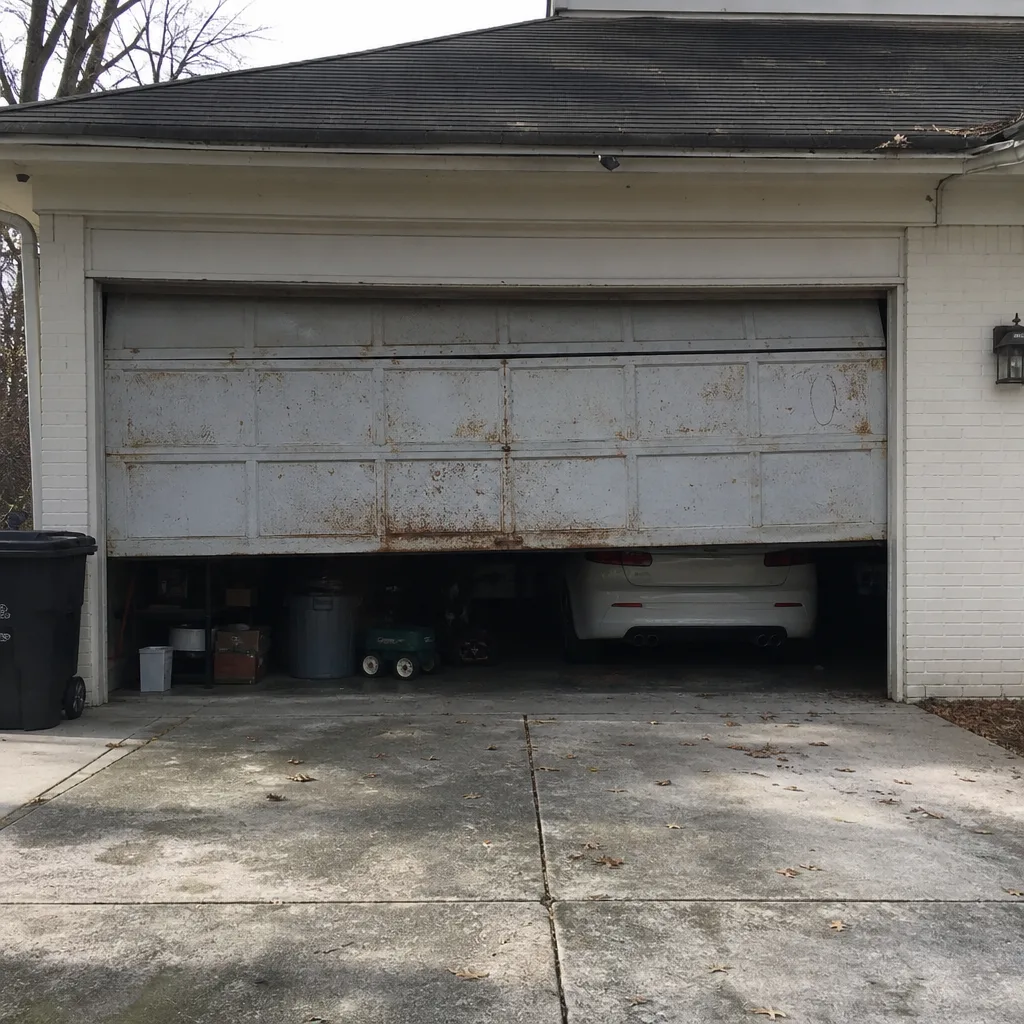 Before
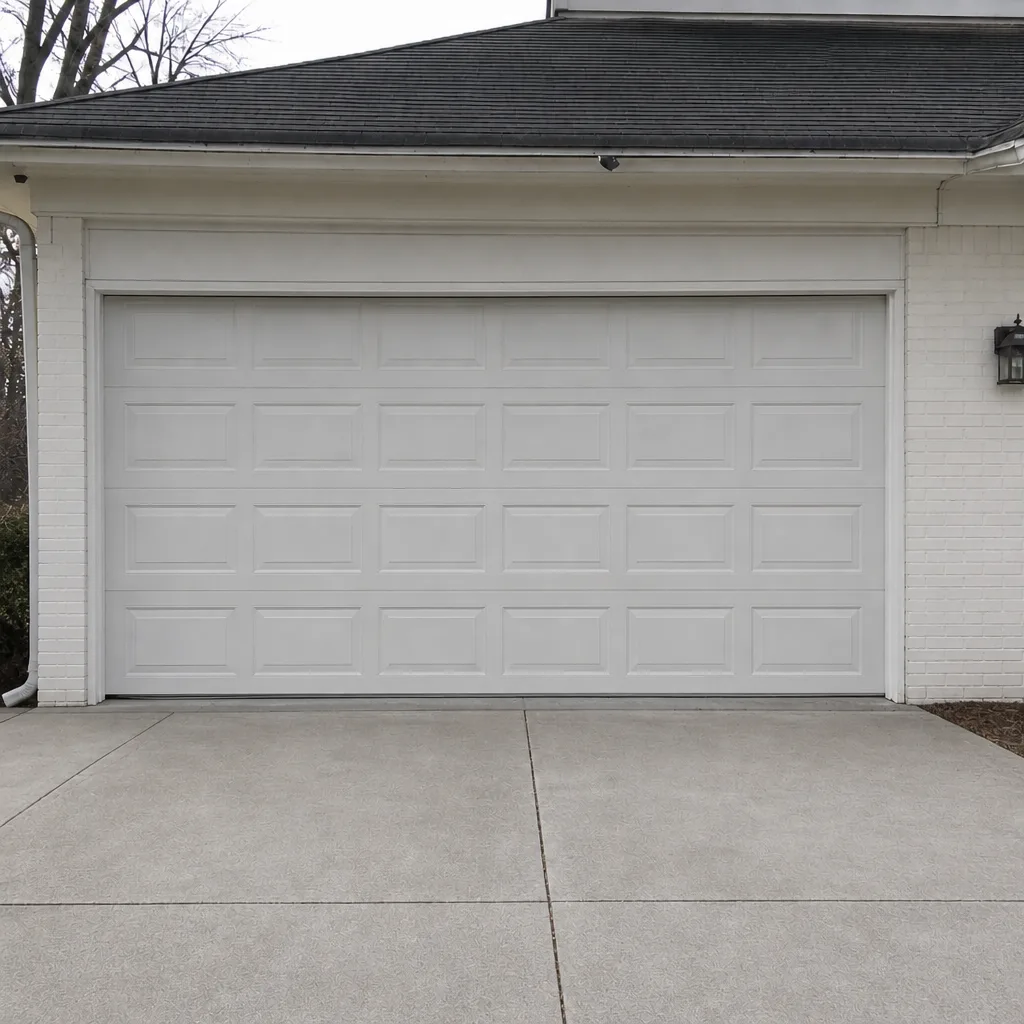 After
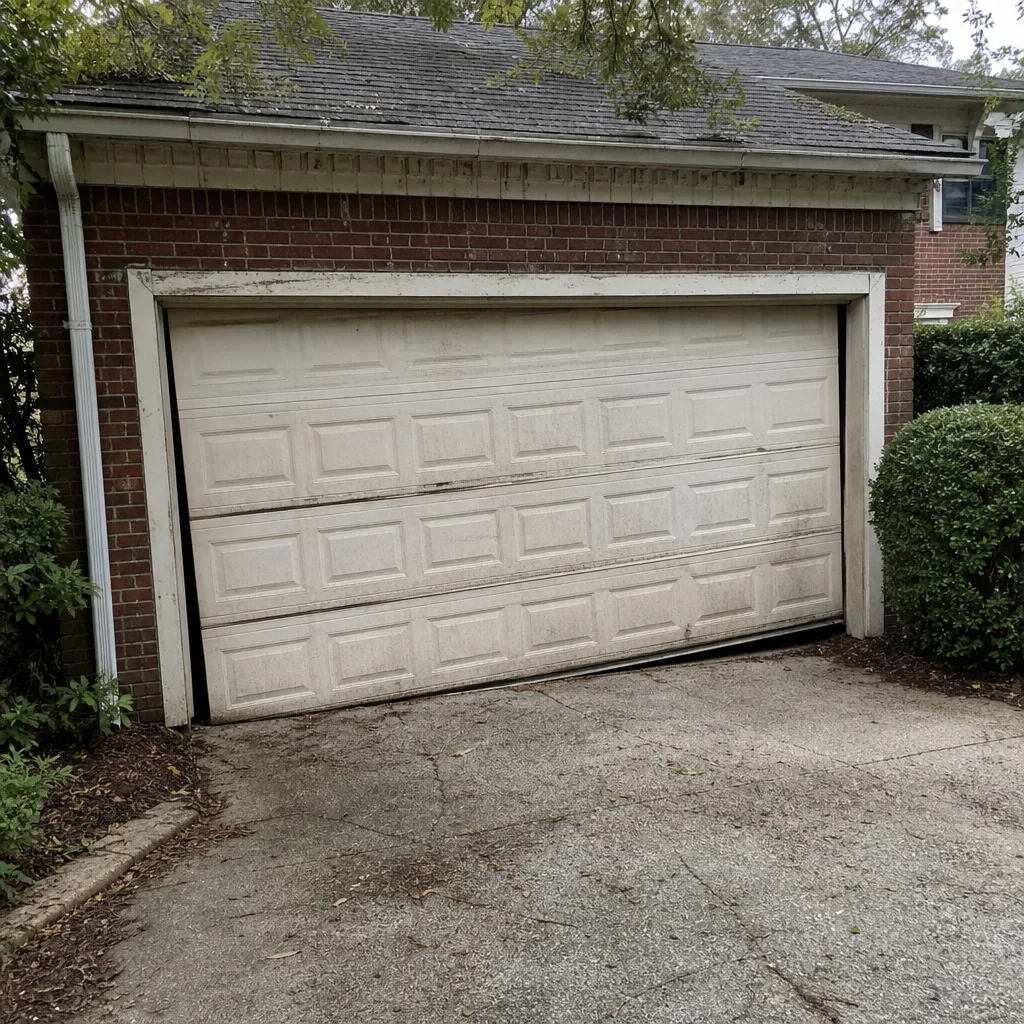 Before
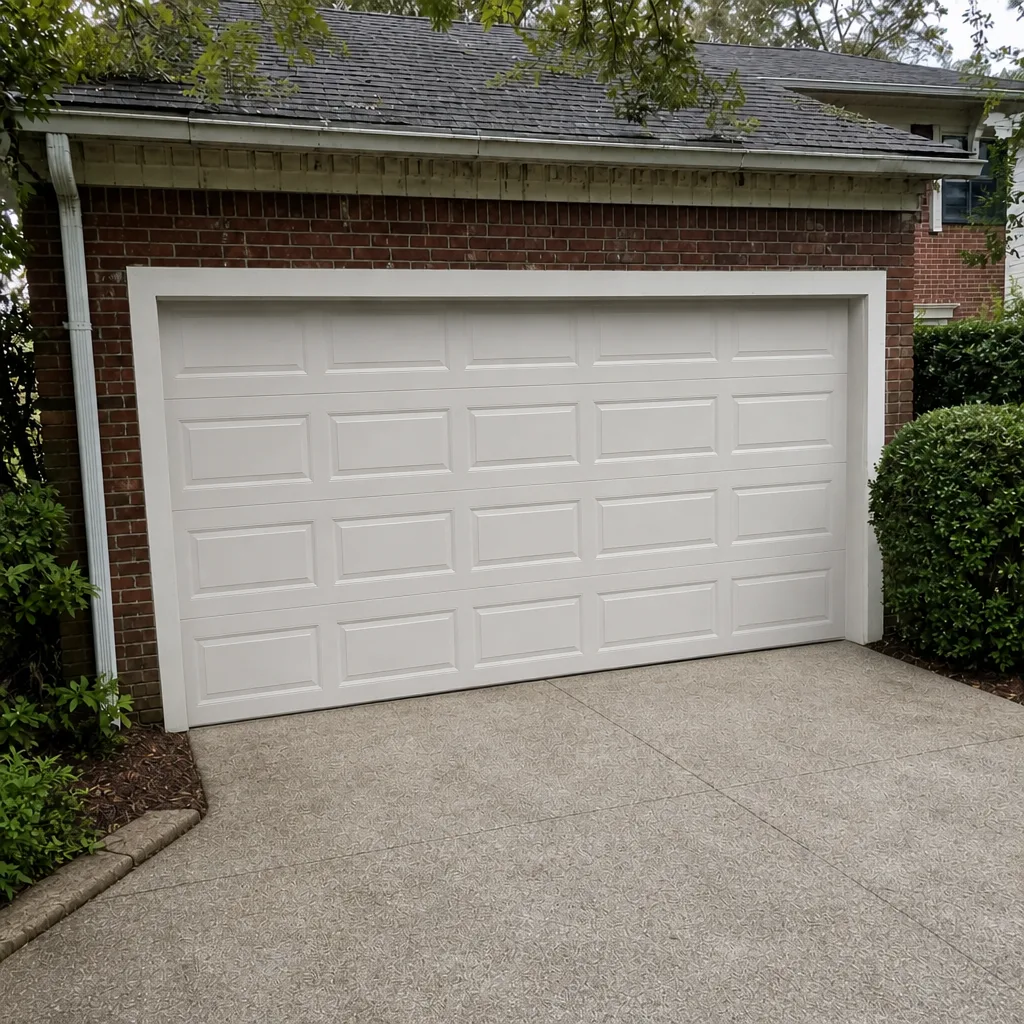 After
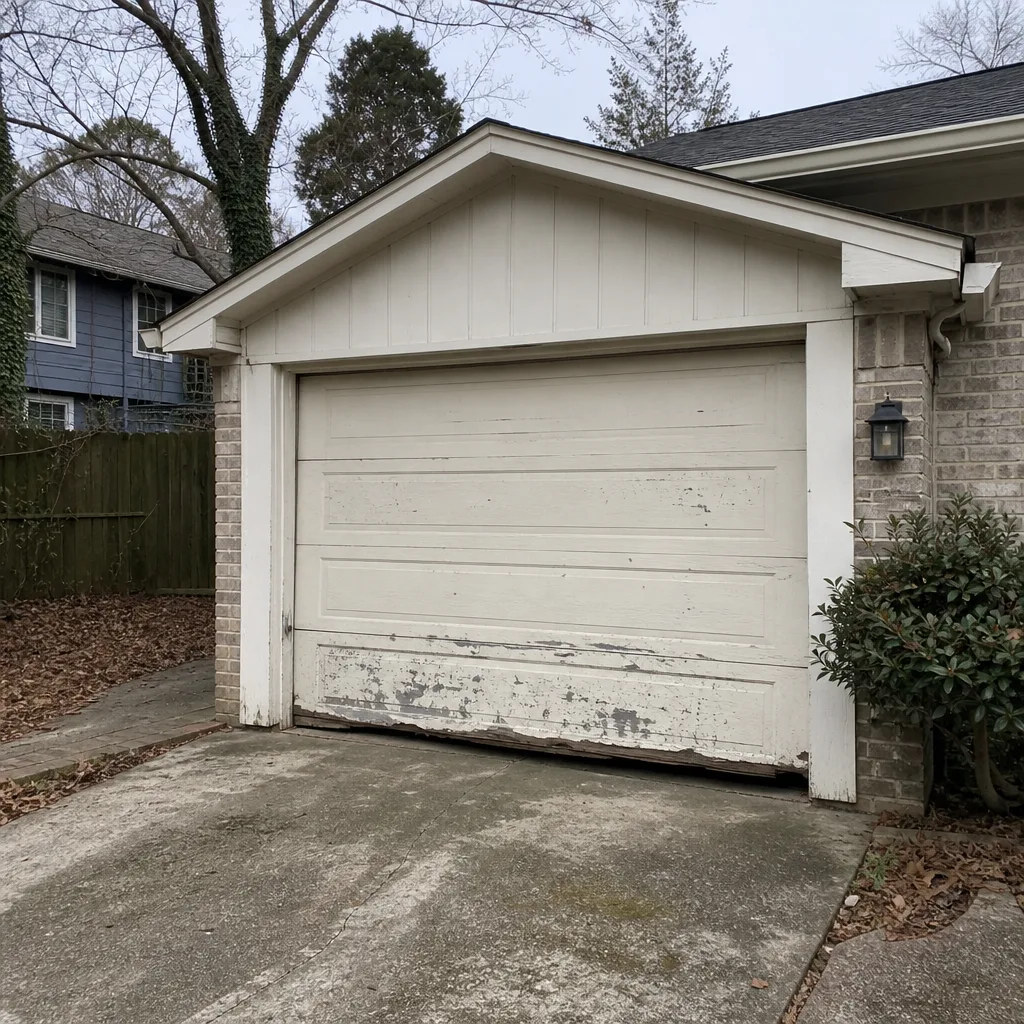 Before
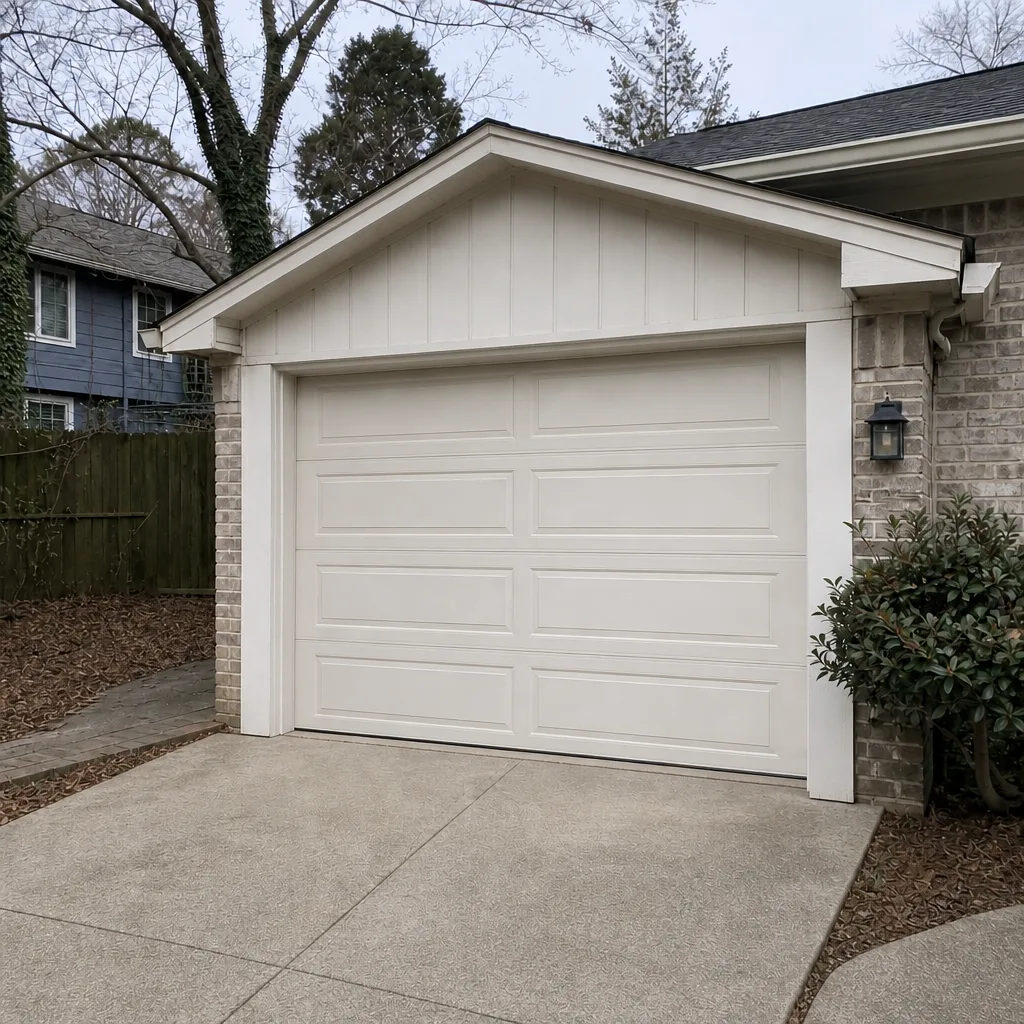 After
When to Call a Professional
Some seasonal care is yours to do: wiping sensors, clearing the seal channel, checking the balance, noting new noises. Other situations should get a call to a specialist. Call when you hear a metallic snap from the garage or the door won’t lift at all (spring); when the door sits crooked, hangs at an angle, or the cable looks rough or discolored (cable or drum); when the door won’t close, reverses on its own, or the opener’s lights blink in a pattern you don’t recognize (opener or sensor); when the weatherstripping is hard, cracked, or letting light through after the first freeze (seal); or when the door is stuck open and you can’t leave the house secure.
If you’re planning a replacement rather than a repair, the same transition-window logic applies: order and measure in the milder weeks so the install is ready for the summer or winter ahead. Garage door installation is a measure-and-schedule job, so book it with time to spare.
Buckhead Garage Door Repair Pros offers free estimates in Buckhead. Call (866) 651-6880. We answer 24/7, and fast dispatch runs from 7am to 7pm, Sunday through Friday. Our technicians have up to 12 years of experience, and we’re certified to service eight leading brands, so the brand you have is the brand we work on. The price is quoted and agreed before any work starts, and the written estimate is the price you pay.
Frequently Asked Questions
Twice a year is the right rhythm for this climate: once in late fall, before the first hard freeze, and once in early spring, as the pollen season starts and temperatures head back up. That schedule catches the summer humidity damage from the previous year and the post-freeze weatherstripping problems in the same visit window. If your door is older or you’ve had a prior repair, ask for an assessment on top of the seasonal check. Call (866) 651-6880 for a free estimate.
Most spring closing problems in Buckhead come from pollen coating on the photo-eye sensors, which blocks the safety beam and stops the door. Wipe both sensor lenses with a soft cloth and test the reversal; if the door still won’t close, the sensor may be misaligned or the opener limit may need adjustment. Call (866) 651-6880 if the wipe doesn’t solve it, and we’ll sort it out.
Torsion spring behavior changes with temperature: cold metal contracts and the door can feel heavier, while heat expands the assembly and can affect balance. The door should still hold a balanced position in every season. If it doesn’t, have it checked in the late-fall or early-spring window rather than adjusting it yourself. Call (866) 651-6880 for a free estimate on a spring check.
Spring replacement in the Buckhead market typically runs $180-$340 for a single spring. Because most doors use a matched pair and the pair is usually replaced together, expect roughly double that for two. The exact figure depends on the door and the spring, and you get a written estimate before any work starts. Call (866) 651-6880 for an exact quote; estimates are free.
For repair calls, yes: we offer same-day service on the repairs we can schedule, and emergency calls get priority. We answer 24/7, and fast dispatch runs from 7am to 7pm, Sunday through Friday. A call outside dispatch hours is booked into the next opening. Call (866) 651-6880 and we’ll give you the soonest slot.
No. The price is quoted and agreed before any work starts, and the written estimate is the price you pay. If the assessment turns up something different from what was described on the phone, we’ll explain it and get your approval before proceeding rather than adding it to the invoice afterward. Call (866) 651-6880 for a free estimate.
The Bottom Line
Buckhead’s garage door calendar isn’t four equal seasons. It’s a long, humid summer that does most of the wear; a short, damp winter; and two narrow transition windows, after the first hard freeze and at the start of spring, where adjustment and inspection catch the most problems. Clear the leaf and pollen debris before the freeze, watch cables and weatherstripping through summer, clean the photo-eye sensors during pollen season, and leave the spring tension to a specialist. Do that, and you’ll spend far less on repairs than the homeowner who waits for the door to fail.
If any part of the checklist turns up something that shouldn’t be handled by hand, that’s what we’re here for. Buckhead Garage Door Repair Pros is a residential garage door specialist, and one call covers repair, opener service, spring work, and installation. Our technicians have up to 12 years of experience, we’re certified to service LiftMaster, Chamberlain, Genie, Clopay, Amarr, Wayne Dalton, Craftsman, and Raynor equipment, and the written estimate sets the final price. Call (866) 651-6880. We answer 24/7. Fast dispatch from 7am to 7pm, Sunday through Friday. Estimates are free.
Written by the team at Buckhead Garage Door Repair Pros.