
Last updated November 21, 2026
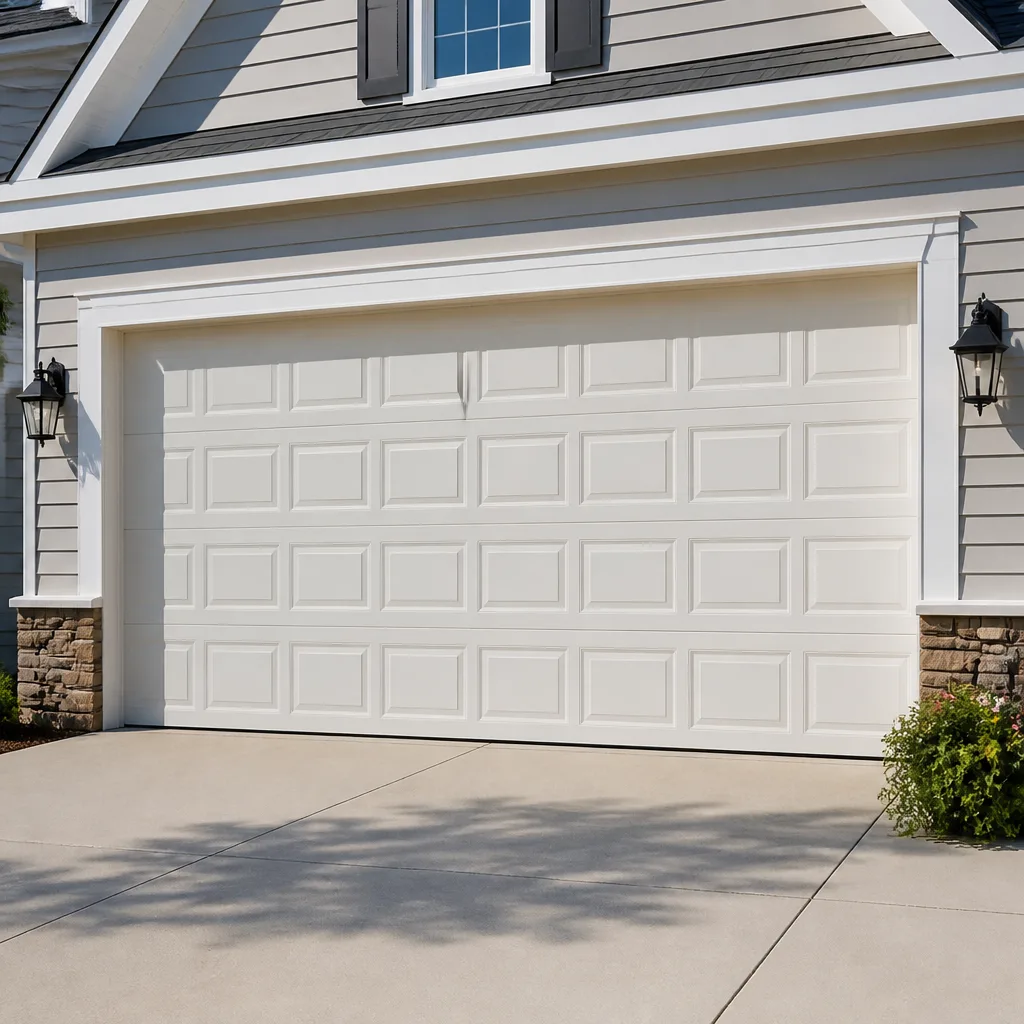 Raised-panel steel
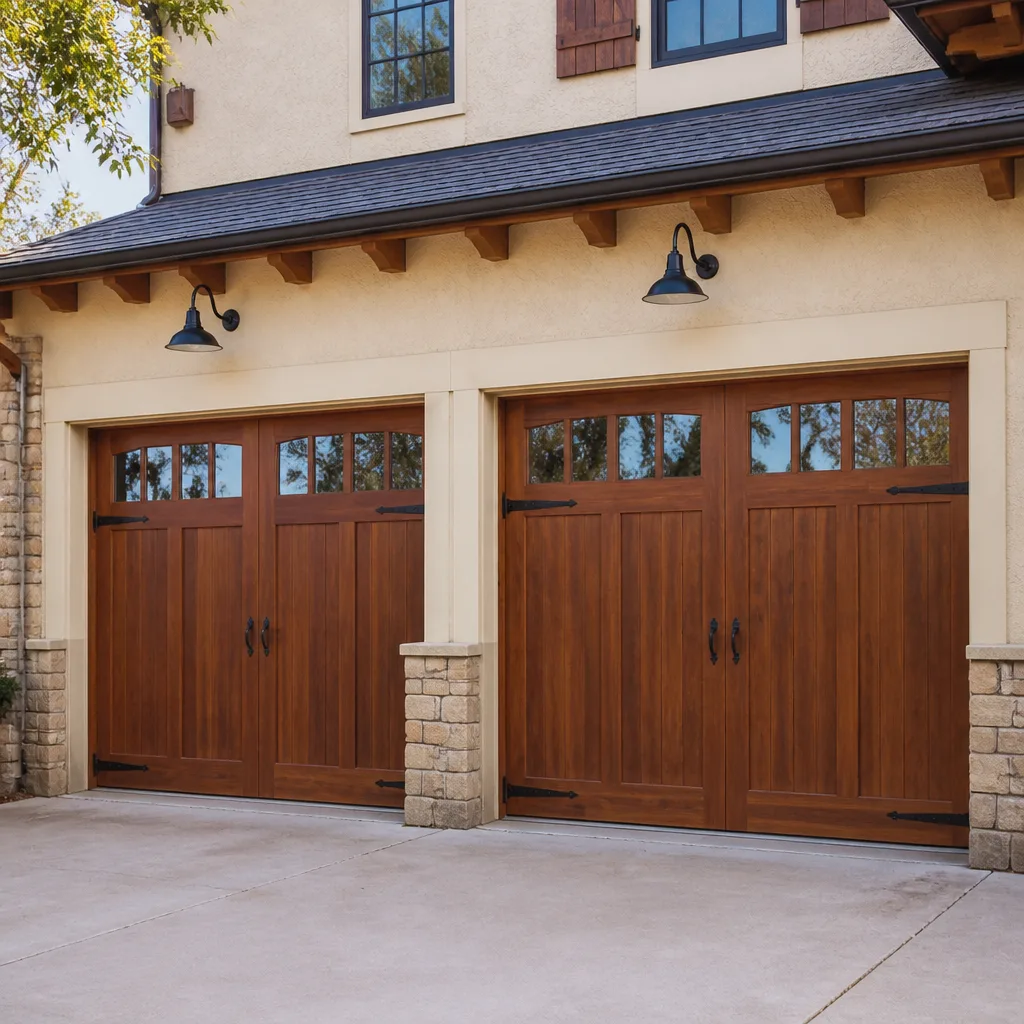 Carriage house
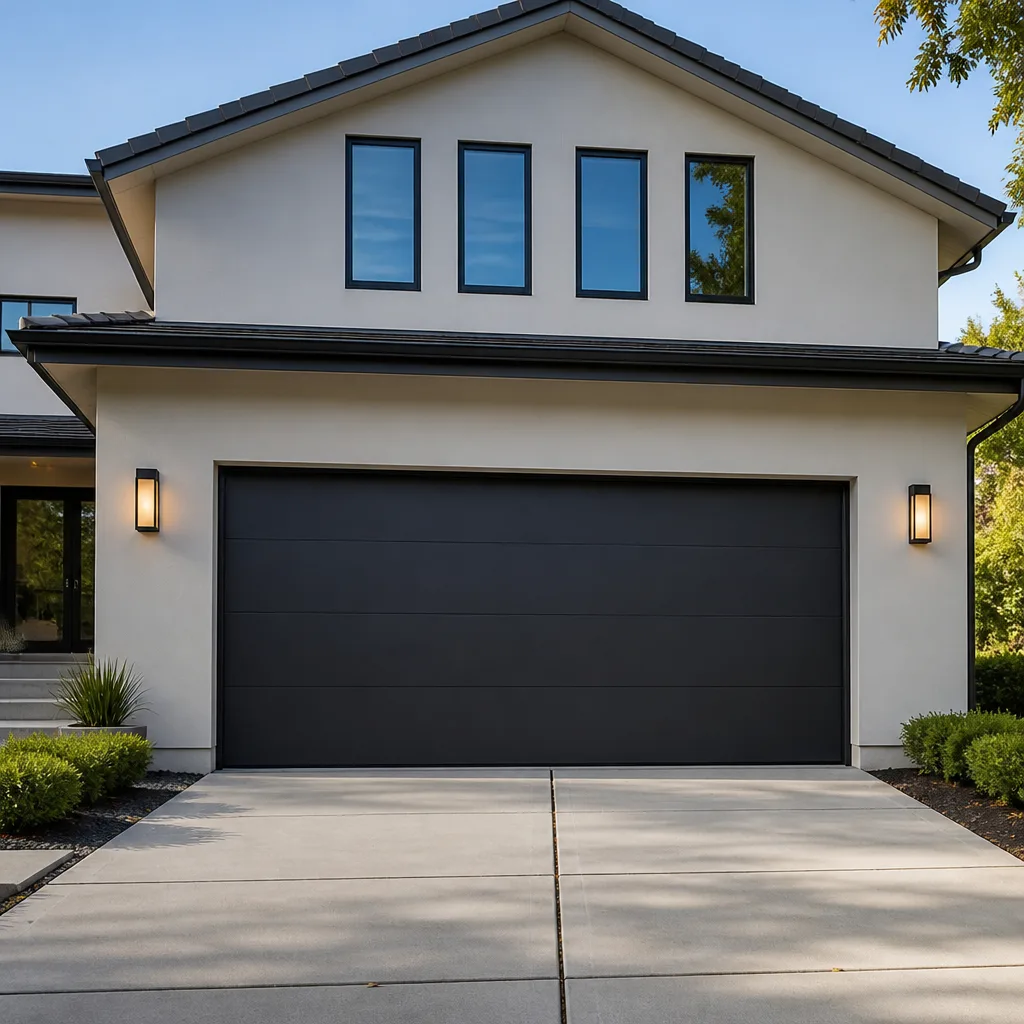 Modern flush
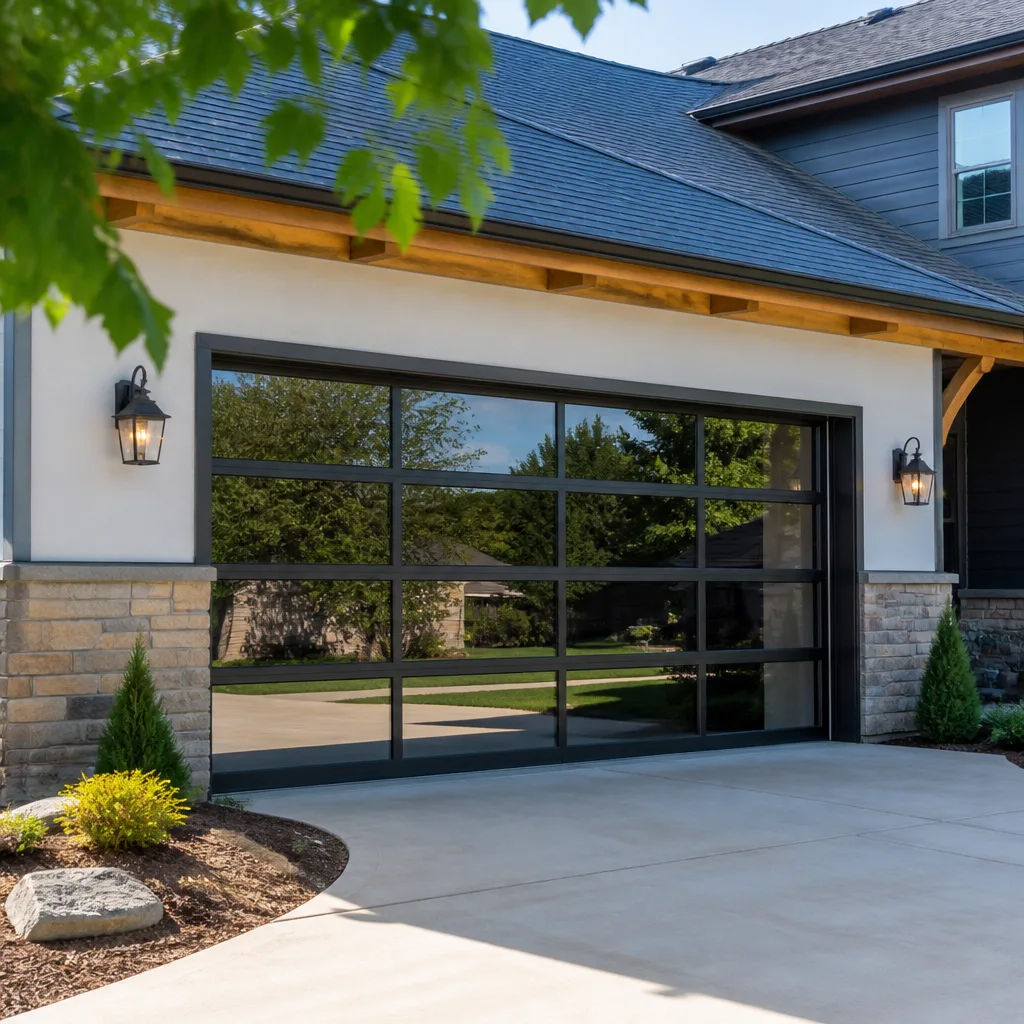 Full-view glass
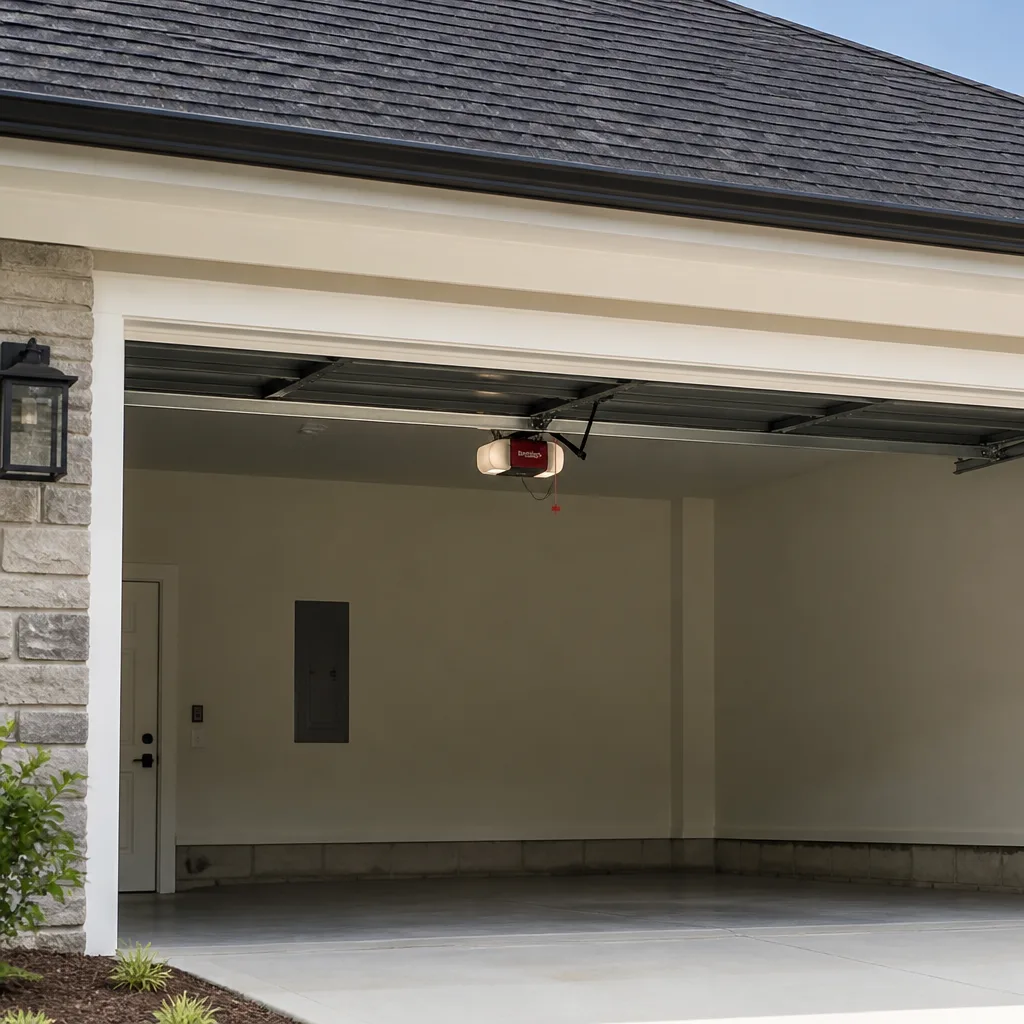 LiftMaster openers
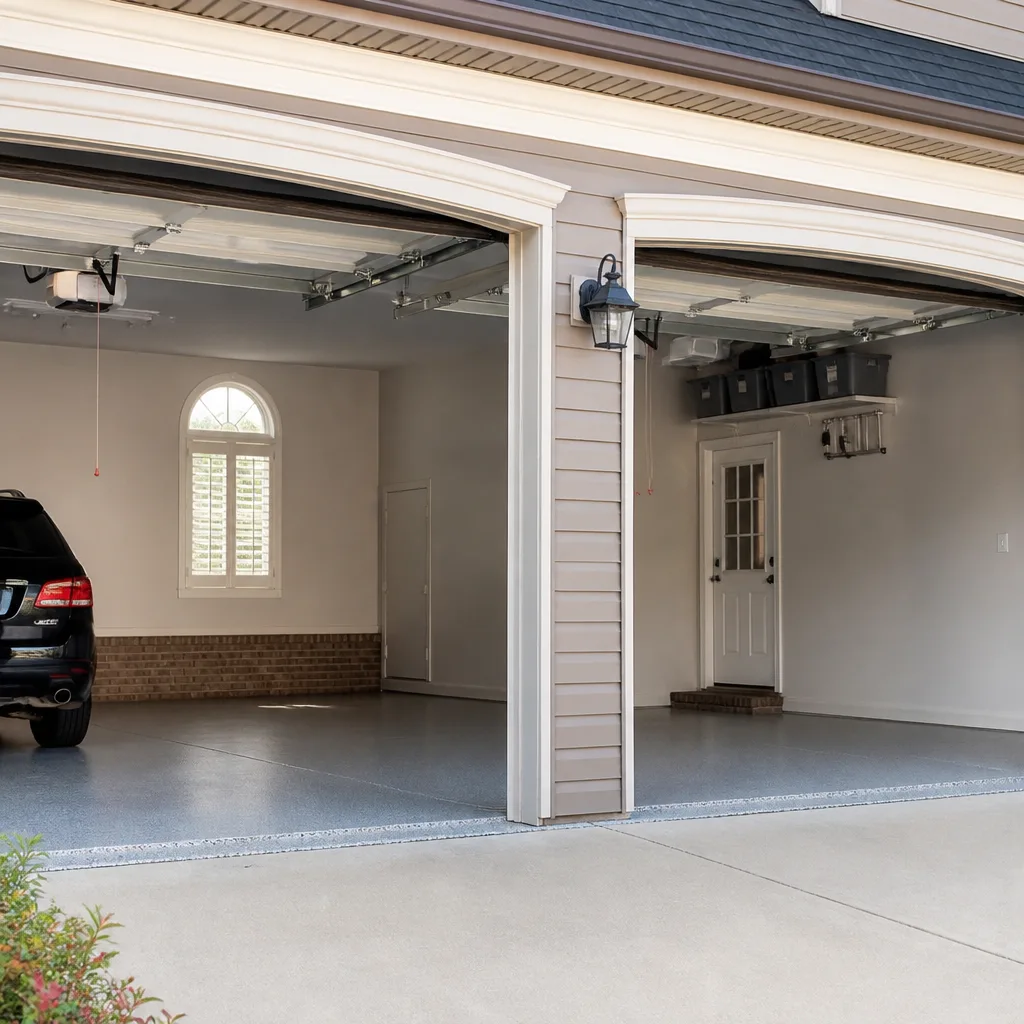 Chamberlain openers
Full 25-point door and opener safety check with every visit - springs, cables, rollers, tracks, and your LiftMaster or Chamberlain opener included
You get a price before we start. It does not change when the pro arrives.
Get your free estimateGarage Door Warning Signs: A Buckhead Homeowner’s Reference Guide
A garage door doesn’t fail without warning. It fails because the warnings were misread. A grinding noise gets dismissed as “normal,” a door that runs a little slow gets blamed on a weakening battery, and a small gap in a torsion spring gets walked past for months. The signs are specific, and so are the timelines that come with them. What most guides leave out is the part that actually matters: which symptoms mean you can watch and wait, which mean you should book a technician this week, and which mean you should stop using the door today. In this guide, we walk through every major failure mode on a residential door, sort each warning sign into one of three urgency tiers, and give you the practical checks a Buckhead homeowner can do from the driveway in a few minutes.
Quick Answer
A garage door is telling you it’s in trouble when it makes grinding, scraping, or snapping noises, when it moves unevenly or slowly, when it reverses before closing, when it sags or hangs crooked, or when you can see a gap or corrosion on the torsion spring. Some of these are monitor-only observations; others mean stop using the door and call a specialist the same day. The dividing line is whether the symptom points to the door’s balance and safety hardware (springs, cables, tracks) or to wear parts like rollers and hinges. Balance and safety issues mean the door comes off its daily use immediately.
Styles & brands we work with
- Raised-panel steel
- Carriage house
- Modern flush
- Full-view glass
- LiftMaster openers
- Chamberlain openers
Table of Contents
- The Three-Tier System: Monitor, Schedule, Stop
- Telling Three Sounds Apart: Rollers, Bearings, Cables
- Reading Torsion Springs by Eye: Gaps, Corrosion, Coil Spacing
- Why a Slow Door Is Usually a Spring Problem, Not an Opener
- Summer Humidity and Wood Door Panels in Buckhead
- The Safety Reverse Test and What a Failure Means
- Opener Warning Signs: When the Motor Is the Problem
- Tracks, Rollers, and Hinges: The Wear Parts Worth Watching
The Three-Tier System: Monitor, Schedule, Stop
Every warning sign on a garage door fits into one of three urgency tiers. Knowing which tier you’re in is the single most useful skill in this guide, because it decides whether you keep using the door, book a visit, or park the car outside and leave the door alone until a technician arrives.
Tier one – monitor. The symptom is nuisance-level and points to a wear part: a light squeak, a slightly noisier door than last year, a small amount of play in a hinge. Nothing about the door’s safety hardware is affected. Write down the date and what you noticed, and keep an eye on it.
Tier two – schedule service. The door still works, but the symptom is trending worse or points to a component reaching the end of its life. A door that’s noticeably louder, a photo-eye that flickers, a remote that only works from close range, a door that occasionally reverses at the bottom. Book a garage door repair visit within the week, before the door stops working entirely.
Tier three – stop using the door immediately. The honest answer to a serious warning sign is that the door comes off daily use right now. Tier three includes:
- A visible gap in a torsion spring, or a spring that has fully separated
- A cable hanging loose, kinked, or off its drum
- A door that’s hanging crooked, sagging at one corner, or off its track
- A loud bang from the garage followed by a door that won’t lift
- A door that reverses the moment it meets any resistance, or won’t reverse at all when tested
- A door that has come off its track and is resting unevenly
Buckhead homes run the gamut from older brick colonials with heavy wood doors to newer builds with steel and aluminum doors, and a failed spring on any of them means the same thing: the door’s weight is no longer being counterbalanced, and the opener is now lifting a load it was never designed to lift. Using a door in that state accelerates damage to the opener and, in the worst case, can bring the door down.
Telling Three Sounds Apart: Rollers, Bearings, Cables
Three garage door noises that get lumped together as “it’s just noisy” are actually three different problems with three different urgencies. Learning to tell them apart is the most valuable diagnostic habit a homeowner can build. You don’t need to fix anything to do this. Just stand in the garage and listen while someone runs the door.
1. The roller rumble: a dry, rolling grind
Nylon and steel rollers ride inside the track channel. When a roller’s bearing wears out or its grease dries up, you hear a low, continuous rumble that rises and falls with the door’s speed. It’s annoying, but a single worn roller is a tier-one or tier-two issue. It gets worse over months, not hours. The noise is usually loudest near the top of the travel.
2. The bearing squeal: a high-pitched shriek
A failing bearing in a hinge or a roller hub produces a sharp, high-pitched squeal, often on one side of the door only. Locate which side by ear, then check whether the noise disappears when the door is stopped mid-travel. A bearing squeal is a tier-two issue. It isn’t dangerous yet, but a seized bearing eventually ruins the hinge it’s riding in.
3. The cable drag: a metallic scrape or snap
A dragging or fraying cable makes a scraping, metallic sound that seems to come from inside the torsion tube area, near the top of the door. Sometimes it’s a sharp snap as a frayed strand breaks free. This is tier three. A damaged cable can whip loose under tension and take the door off balance in an instant. Stop using the door and call for garage door repair in Buckhead the same day.
If you’re not sure which of the three you’re hearing, don’t force the door through another full cycle to find out. A phone call and a short description of the sound is enough for a technician to narrow it down before arriving.
Reading Torsion Springs by Eye: Gaps, Corrosion, Coil Spacing
Torsion springs sit above the door on a steel shaft, and they do the heavy lifting: they counterbalance the door’s weight so the opener only has to guide it. When a spring fails, the door’s full weight drops onto the opener and cables at once. That’s why a spring inspection is the highest-value two-minute check on this whole list. Do it from the floor with a flashlight, never by climbing a ladder or reaching for the spring.
What a gap looks like
A healthy torsion spring winds tightly, coil against coil. A winding gap of even a few inches between coils – visible as a visible split in the tightly coiled spring – means the spring has broken. This is the clearest tier-three sign on the whole door. Stop using the door.
What a corrosion streak means
A spring that shows a reddish or brown rust streak running along its length, or patches of surface corrosion on the coils, is a spring near the end of its life. The rust indicates the steel is weakening. This is tier two: it hasn’t failed yet, but don’t wait for the bang.
Uneven coil spacing
When the coils on one side are tighter than the other, or the spring looks like it’s sagging on its shaft, the spring has lost some of its tension. A door with a slack spring will feel heavier to lift by hand than it should. This is also tier two, but it deserves a call sooner than a corrosion streak.
A matched pair of springs is usually replaced together. If one spring of a pair has broken, the other is under the same load cycle and is likely close behind. A technician will check both while they’re on the job. Our technicians have up to 12 years of experience reading spring condition, and spring repair is offered as a dedicated service rather than a subcontracted add-on – the safety training matters on this job.
Why a Slow Door Is Usually a Spring Problem, Not an Opener
When a door that used to open in about ten seconds now takes twenty, most homeowners assume the opener is tired or the battery in the remote is weak. In our experience, that’s rarely the answer. A door that “just runs slow” is more often a door whose balance has drifted – which means the spring tension has slackened or a spring is failing – and the opener is now working harder to complete each cycle.
How to tell the difference in 30 seconds
With the door fully closed and the opener disconnected (most openers have a pull cord or emergency release handle hanging from the trolley), lift the door by hand to about waist height. Then let go.
- If the door stays roughly where you left it, the spring is doing its job. The slow operation is likely an opener issue.
- If the door drops quickly or feels very heavy to lift, the spring has lost tension. That’s a spring problem, and it’s a tier-two or tier-three issue depending on how heavy it feels.
- If the door won’t stay up at all, stop. Reconnect the opener only to lower the door gently and leave it closed until a technician sees it.
Reconnecting the opener after the test is a simple matter of pulling the release cord back into its carriage slot, but if you’re unsure, don’t. A technician would rather do that part for you. A LiftMaster, Chamberlain, or Genie opener that’s running slow on a balanced door usually needs a travel-limit adjustment or a worn gear, both quick garage door opener repair jobs. A slow door on an out-of-balance door needs spring work before any opener adjustment.
Summer Humidity and Wood Door Panels in Buckhead
Buckhead’s summers are humid, and wood garage doors feel it. The panels take on moisture through the summer and dry out again in the cooler months, which means the door’s dimensions shift a little every year. That’s normal for wood, and most of the time the shift is cosmetic. But sometimes it isn’t, and the difference matters.
Cosmetic swelling
A wood panel that swells slightly and then shrinks back is doing what wood does. Look for small gaps opening and closing between stiles and rails, or a paint film that flexes rather than cracks. If the door still runs smoothly and level through the seasonal change, plan a repaint every few years and leave the hardware alone.
Structural swelling
When swelling crosses into structural territory, the door’s hardware alignment starts to suffer. Watch for these signs:
- Sticking at one corner as the door comes down, then needing a shove to close
- The door riding visibly crooked in the opening – one side closer to the track than the other
- Hinges that have pulled loose from their wood screws, or screws that have widened their holes
- A panel that’s warped enough that the door’s top and bottom edges no longer sit parallel
- Paint cracking at panel joints rather than flexing
Once you see any of these, stop treating the swelling as cosmetic. Misaligned hardware takes force the door isn’t designed to absorb, and it puts strain on the opener and springs. This is a tier-two issue that needs a technician, not another coat of paint. A Raynor or Clopay wood door is worth maintaining properly because the door itself has plenty of life left – the alignment just has to be corrected before the hardware damage compounds.
Buckhead’s climate also means a wood door benefits from a spring check every year or two, because the annual cycle of swelling and shrinking puts repeated stress on the panel joints and, in turn, the hinges that hold them.
The Safety Reverse Test and What a Failure Means
The safety reverse test is the most important two-minute check you can do on your garage door, and most homeowners have never done it. It confirms that the door will reverse if it contacts an object on the way down, which is the feature that stops the door from closing on a person, a pet, or a bike left in the doorway.
How to run the test
- Open the door fully, then close it with the wall button.
- While it’s closing, place a small object – a roll of paper towels or a brick – flat on the ground in the middle of the opening.
- Watch the door. It should contact the object and reverse back up within a couple of seconds.
- If the door keeps going and crushes the object, or stops without reversing, the safety system is failing.
Then test the photo-eye. Press the wall button to close the door and pass your leg through the beam near the floor. If the door reverses, the photo-eye is working. If it doesn’t, the door has a safety failure.
What a failure means
A door that won’t reverse is a tier-three problem. The opener’s force limits are set too high, the photo-eye is misaligned or dirty, or the travel limits have drifted. Any of these can let the door close on something it shouldn’t. Don’t use the door until it’s checked. Cleaning the photo-eye lenses with a soft cloth is fine; anything beyond that, including adjusting force limits on a LiftMaster, Chamberlain, or Genie opener, is a technician’s job.
If you’re in a Buckhead home with a school-age child or a pet, run this test monthly. It’s the single check that matters most for household safety, and it’s the one most easily forgotten.
Opener Warning Signs: When the Motor Is the Problem
An opener that’s failing announces itself in a handful of predictable ways. The trick is telling opener symptoms apart from door-balance symptoms, because they look similar from the driver’s seat and they have completely different fixes.
Signs the opener itself is the problem
- The door lifts an inch or two, then reverses. This usually means the safety reverse is triggering, which can be a bad opener force setting or an obstruction. Worth a technician’s look.
- The motor hums but the door doesn’t move. The opener’s drive gear or a coupling has failed, or the door is stuck. Don’t keep pressing the button.
- The remote only works from very close range. Worn remote batteries or a failing receiver. A tier-two, cheap fix.
- The opener runs but the door lurches at the start and end of travel. Travel-limit drift. Tier two.
- The lights on the opener blink in a repeating pattern. Modern openers use light-blink codes to report faults; a LiftMaster or Chamberlain unit will usually tell you what it thinks is wrong if you count the flashes. Don’t try to fix the cause yourself – the code is information a technician can use.
Signs it’s not the opener
If the door is heavy to lift by hand, the opener is just the messenger. So is a door that grinds in the track, drags a cable, or hangs crooked. Opener repair on a door that’s out of balance won’t fix the underlying problem, and the opener will keep failing under the strain. A technician checks balance before touching the opener, which is why we can usually tell you which one is at fault before we arrive. Send a short description of the symptom when you book, and we’ll arrive with the right diagnostic in mind.
Tracks, Rollers, and Hinges: The Wear Parts Worth Watching
The wear parts on a garage door – rollers, hinges, and to a lesser extent the track itself – degrade slowly and predictably. They’re the parts where “monitor” is usually the right tier, and where a few minutes of observation each season saves you a bigger repair down the line.
Rollers
Look at the rollers with the door closed. Healthy rollers are round and quiet. Worn ones look elliptical or have flat spots, and the nylon or steel surface is scuffed. You can feel a worn roller by rocking the door slightly in the track; there should be minimal play. A couple of worn rollers are worth replacing as a set of four or more, since they wear at the same rate.
Hinges
Hinges connect the door panels. When a hinge loosens, you’ll see a small gap open up between two panels, or the door will start to rattle when it moves. Loose hinges should be tightened before they strip their screw holes; once a hole widens, the fix involves a larger screw or a reinforcement plate, and the cost goes up. Inspect hinges each spring.
Tracks
Tracks should be straight and even. A dented or bent track section is a tier-three sign if the door is running off it, and a tier-two sign if the door runs fine but a section is visibly dented. Buckhead homes with tight garages are prone to track damage from garden tools and stored items being shoved against the vertical track – a quick visual check each season prevents a door that comes off its run.
Common Mistakes to Avoid
- Assuming a slow door means a battery problem. Nine times out of ten, a slow door is a balance problem. Test the balance by hand before spending money on a new remote or battery.
- Calling a general handyman for a tier-three symptom. Spring and cable work requires specialist training and the right tools. A generalist who’s comfortable with a drill is not set up for high-tension springs.
- Ignoring the “bang” from the garage. A loud bang is usually a spring breaking. A door that won’t open afterward almost always means a failed spring, not a failed opener. Don’t keep pressing the button.
- Trusting a door because the opener still lifts it. A door can be running on a broken spring and the opener can still drag it up. That’s not a working door – that’s an opener being destroyed.
- Treating summer wood swelling as purely cosmetic. In a Buckhead summer of high humidity, a wood panel that sticks or shifts is telling you the hardware is out of alignment. Repainting without correcting the alignment doesn’t fix it.
- Skipping the safety reverse test. The door’s most important safety feature is also the least-used test. Two minutes a month is worth it.
- Waiting for the door to stop working completely. Most serious failures give clear warning signs weeks or months in advance. Responding at tier two saves you the tier-three emergency.
See the difference
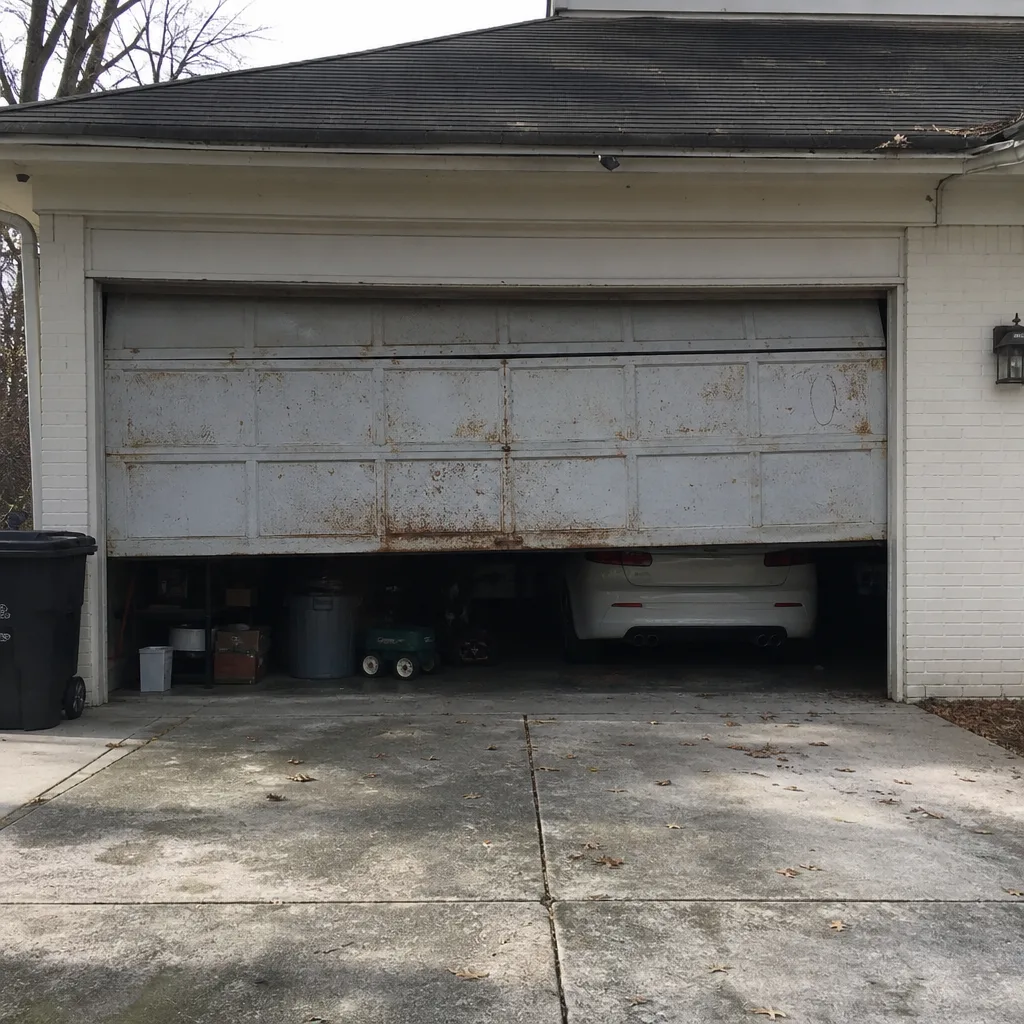 Before
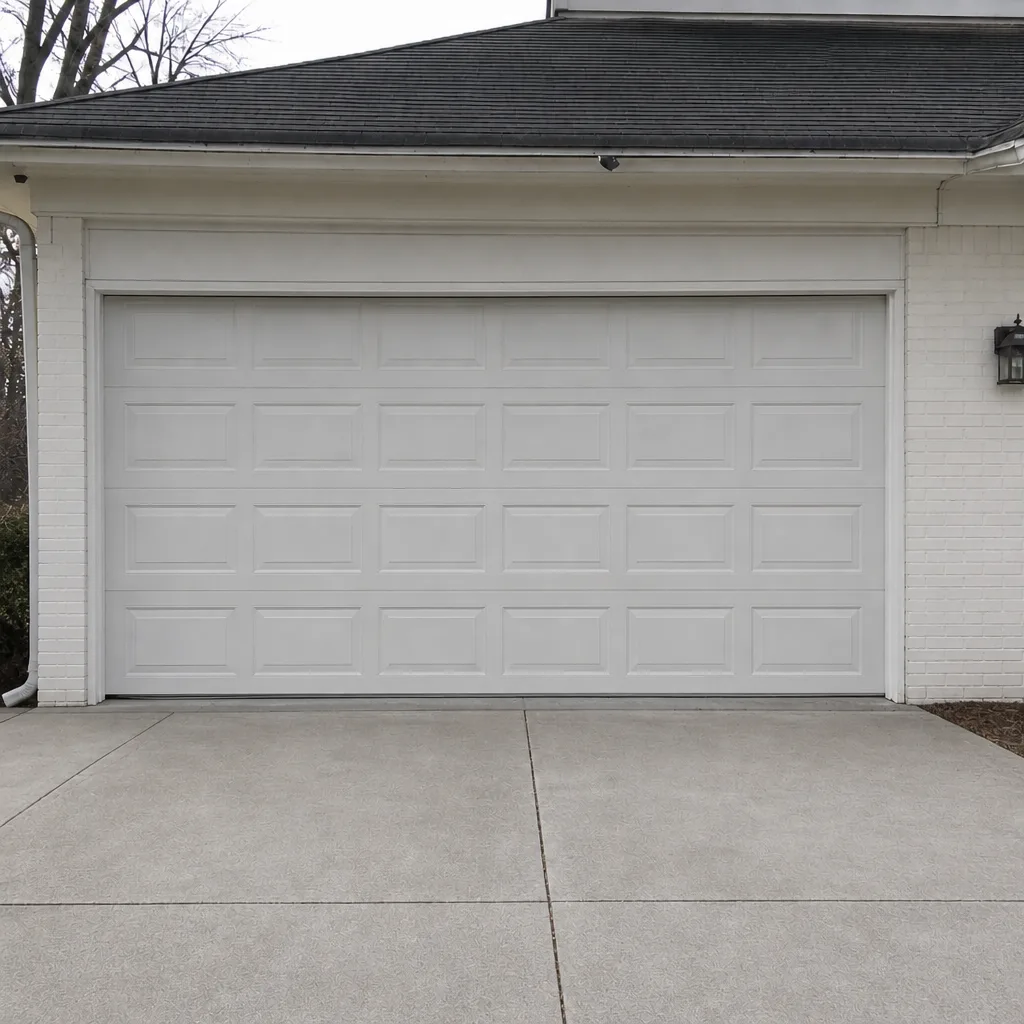 After
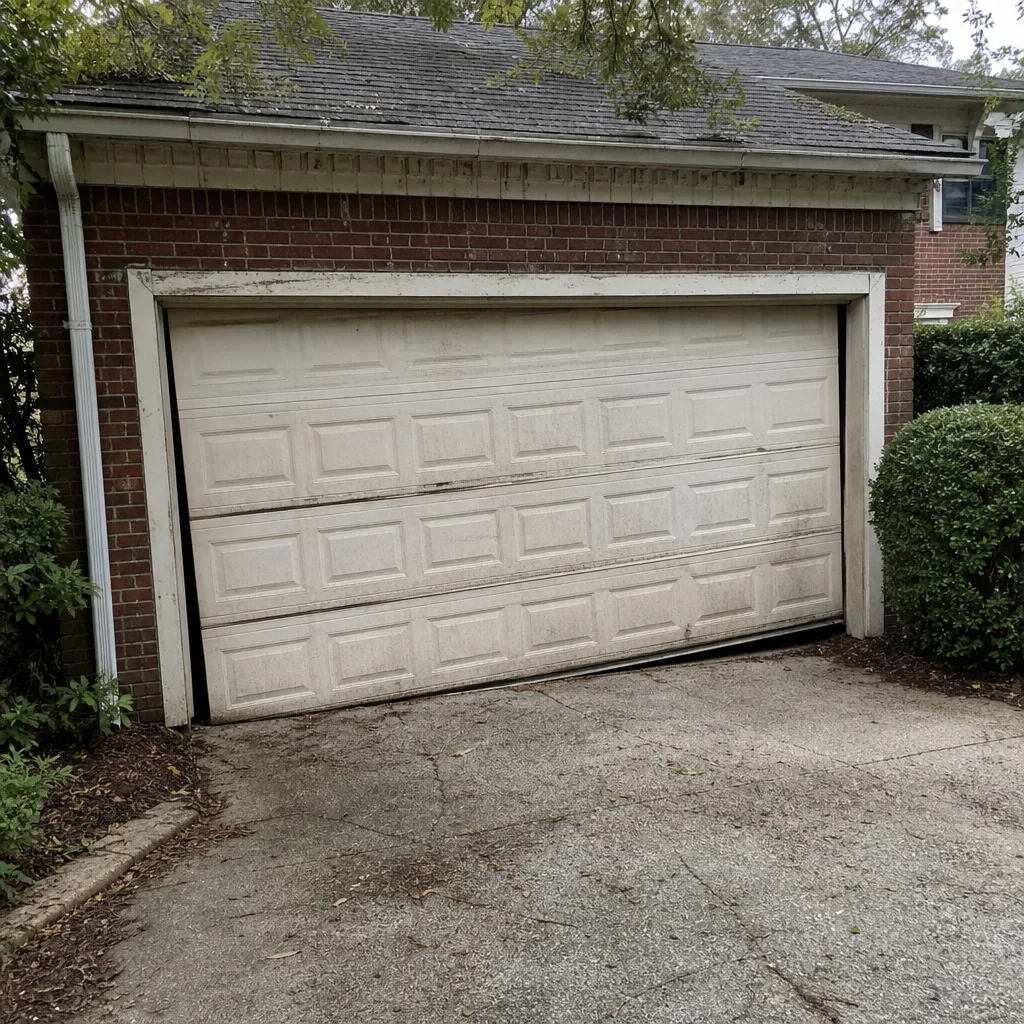 Before
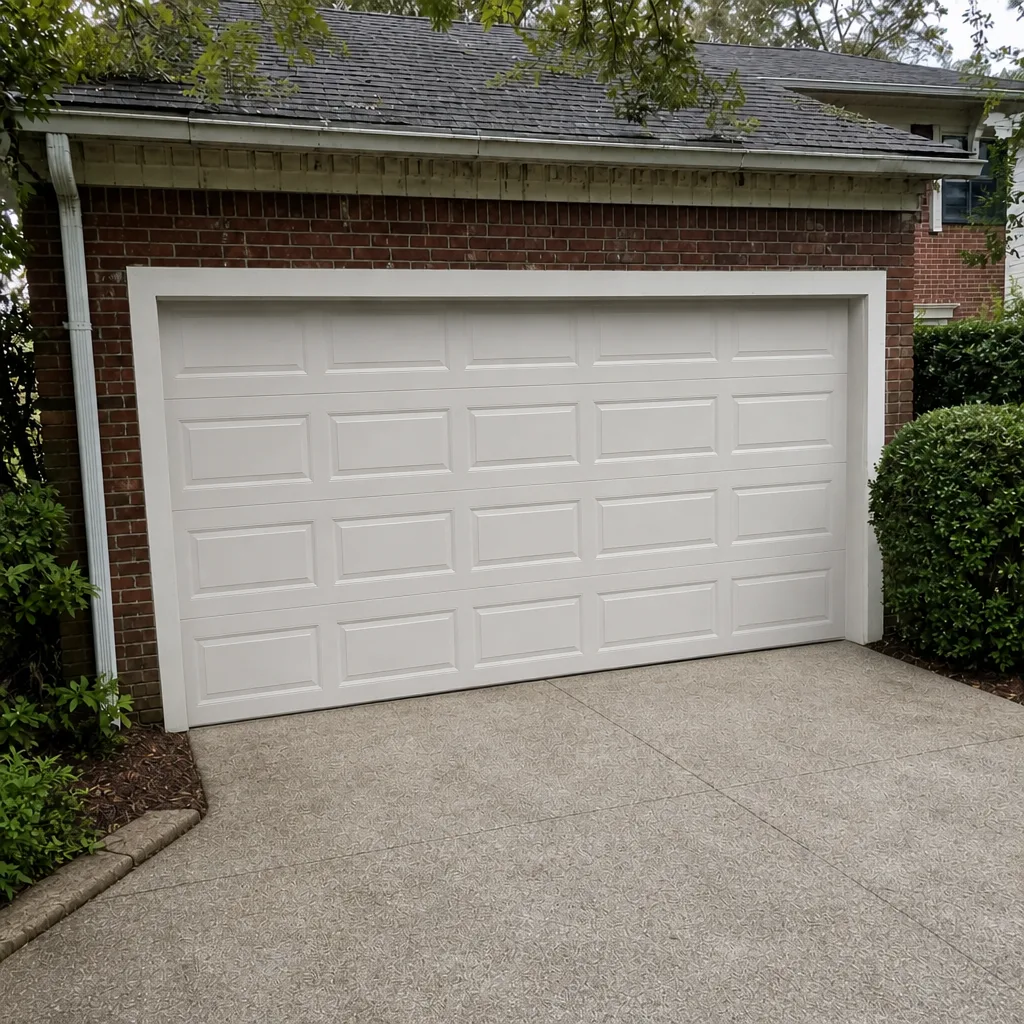 After
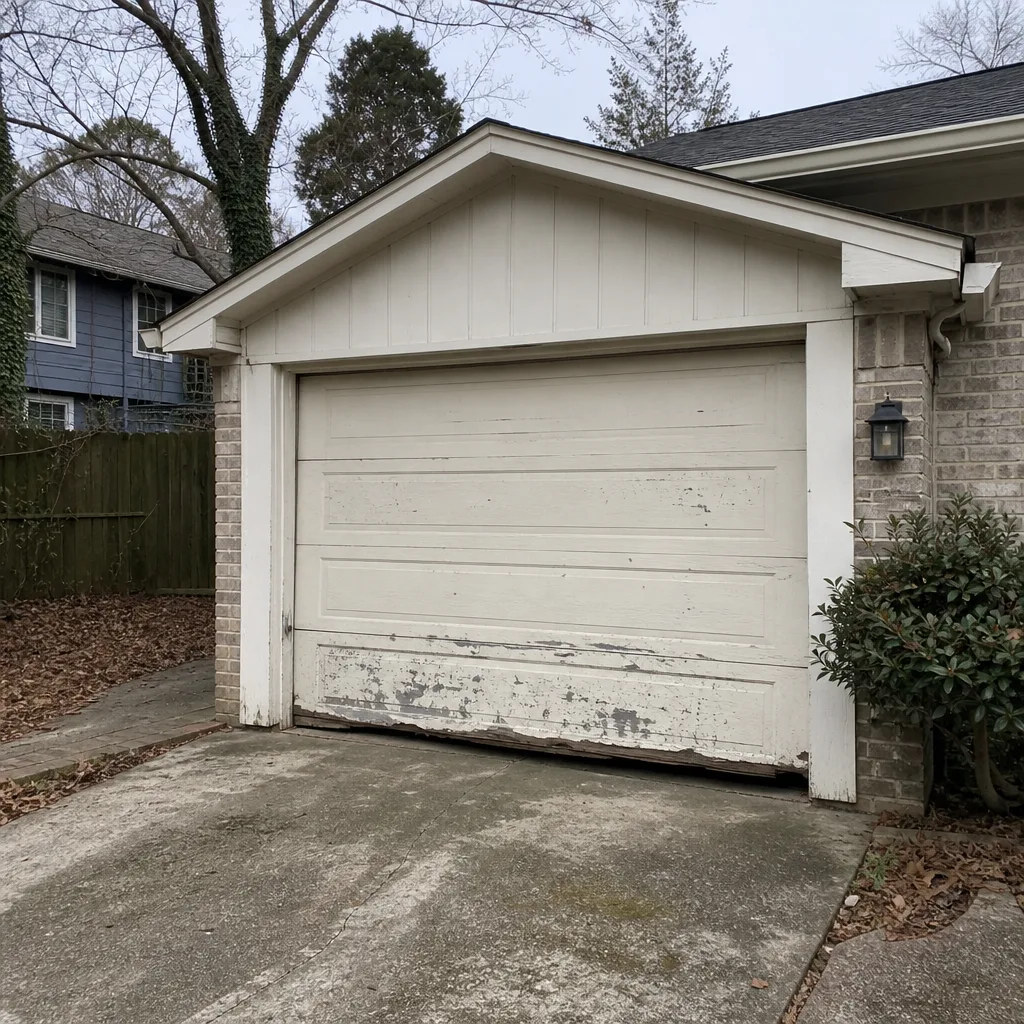 Before
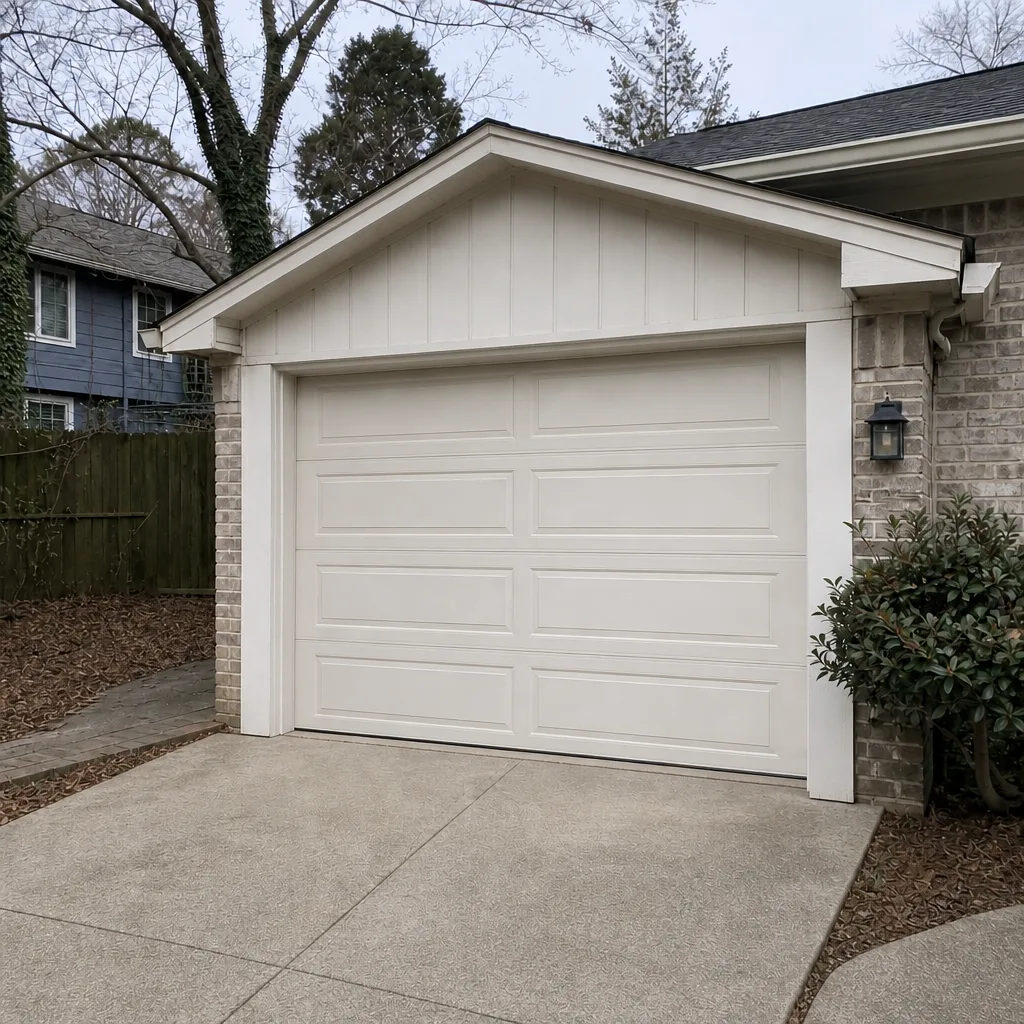 After
When to Call a Professional
Call a professional the same day for any tier-three symptom: a visible gap in a torsion spring, a loose or kinked cable, a door that’s come off its track, a door that’s sagging or hanging crooked, or a safety reverse test that fails. Buckhead homeowners should also call when a door has been taking progressively longer to open, when a wood door is sticking or the hinges have pulled loose, or when a lift runs but the door won’t move. We can work with your insurer on storm or impact damage, and we’ll quote you a fixed written price before any work starts. Buckhead Garage Door Repair Pros offers free estimates in Buckhead – call (866) 651-6880. We answer 24/7. Fast dispatch from 7am to 7pm, Sunday through Friday.
We work on the brand you have. Our technicians have up to 12 years of experience across LiftMaster, Chamberlain, Genie, Raynor, Clopay, Amarr, Wayne Dalton, and Craftsman systems, which means the diagnosis doesn’t start with a guess. If you’re weighing a repair against a replacement, the free estimate includes a plain comparison of both.
Frequently Asked Questions
A broken spring shows a visible gap of a few inches between coils, while a worn spring shows corrosion streaks or uneven coil spacing but still holds together. A broken spring is a stop-using-the-door problem; a worn one is a schedule-service problem. Either way, a technician should confirm before you run the door again. Call (866) 651-6880 for a free estimate.
Almost never. A slow door is usually a spring tension problem, not an opener battery issue. Do the 30-second balance test: disconnect the opener and lift the door by hand to waist height, then let go. If it stays, the balance is fine; if it drops, the spring is the culprit. Call (866) 651-6880 for a free estimate.
Only if the sticking comes with misaligned hardware – hinges that pulled loose, the door riding crooked, or a corner that needs a shove. Light seasonal sticking that clears as the weather cools is cosmetic. When in doubt, a quick inspection is free. Call (866) 651-6880 for a free estimate.
Not for a job that’s been properly assessed from the start. You’ll be quoted a fixed written price after the technician inspects the door, and the price is agreed before any work starts – so the number on the invoice matches the number you agreed to. Call (866) 651-6880 for a free estimate.
No – torsion springs are under extreme tension and cause serious injury when they release unexpectedly. This is one of the few homeowner tasks that genuinely shouldn’t be attempted without specialist training and tools. A specialist repair is the safe answer. Call (866) 651-6880 for a free estimate.
Yes – emergency garage door service is a real, everyday part of what we do, not an upsell. Send a short description of what the door is doing and we’ll come as soon as we can, with the right parts for the brand you have. Call (866) 651-6880. We answer 24/7. Fast dispatch from 7am to 7pm, Sunday through Friday.
The Bottom Line
Warning signs are only useful if you know what tier you’re in. Monitor tier-one symptoms – a squeak, a slightly noisier door – and note when they started. Schedule tier-two symptoms within the week, because the balance and alignment problems behind them get worse with every cycle. And never keep using a door in tier three: a broken spring, a loose cable, a door off its track, or a failed safety reverse. If you remember nothing else, do the balance test once a season and the safety reverse test once a month; those two checks catch most serious problems early. If you’re not sure which tier you’re in, describe the symptom to us and we’ll tell you before we arrive. Buckhead Garage Door Repair Pros is one call for repair, opener service, spring work, and garage door installation, so you don’t need to source a second contractor for an upgrade. Call (866) 651-6880 for a free estimate.
Written by the team at Buckhead Garage Door Repair Pros.